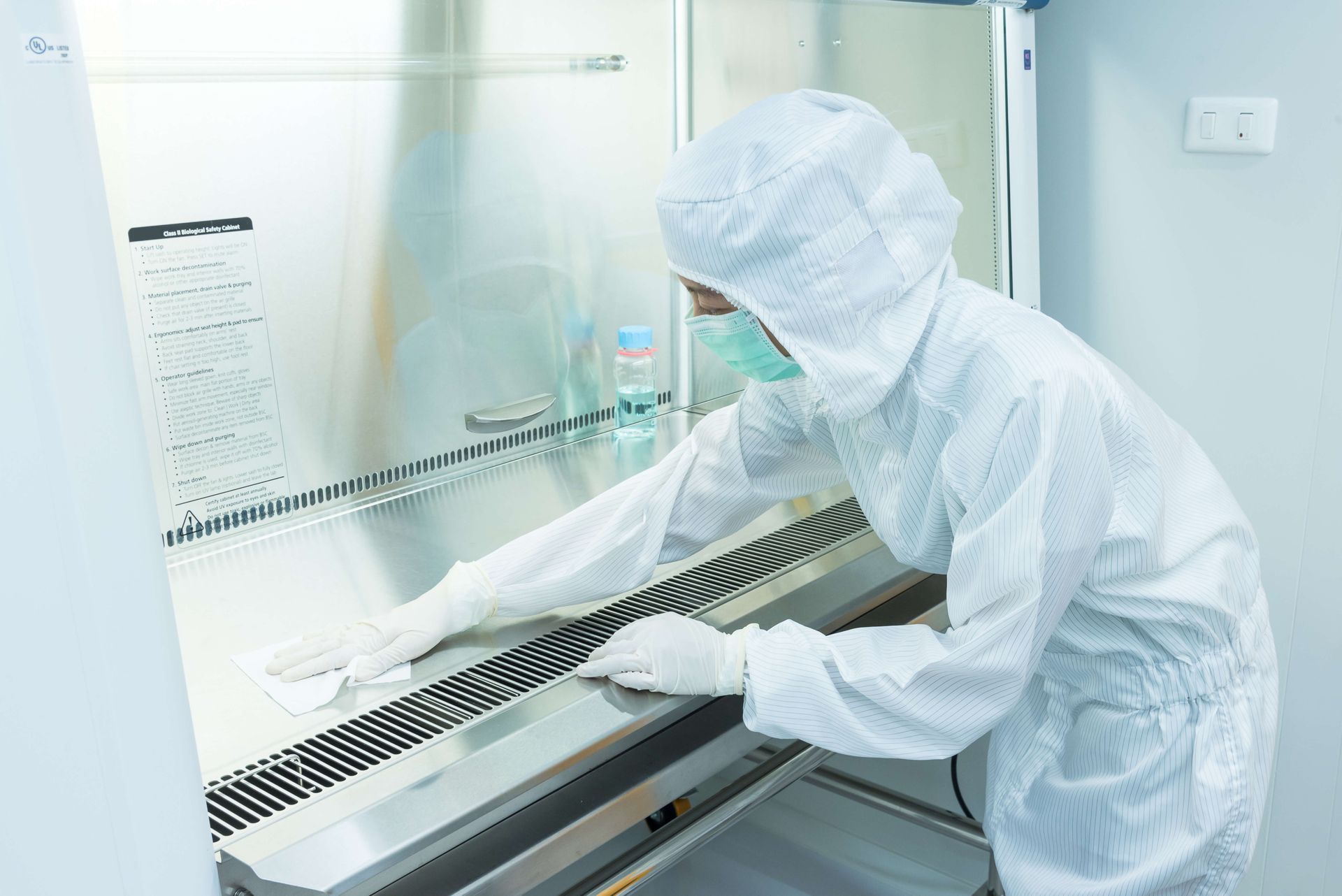
Deep Dive into Filter Leak Testing: Methods, Equipment, and Standards
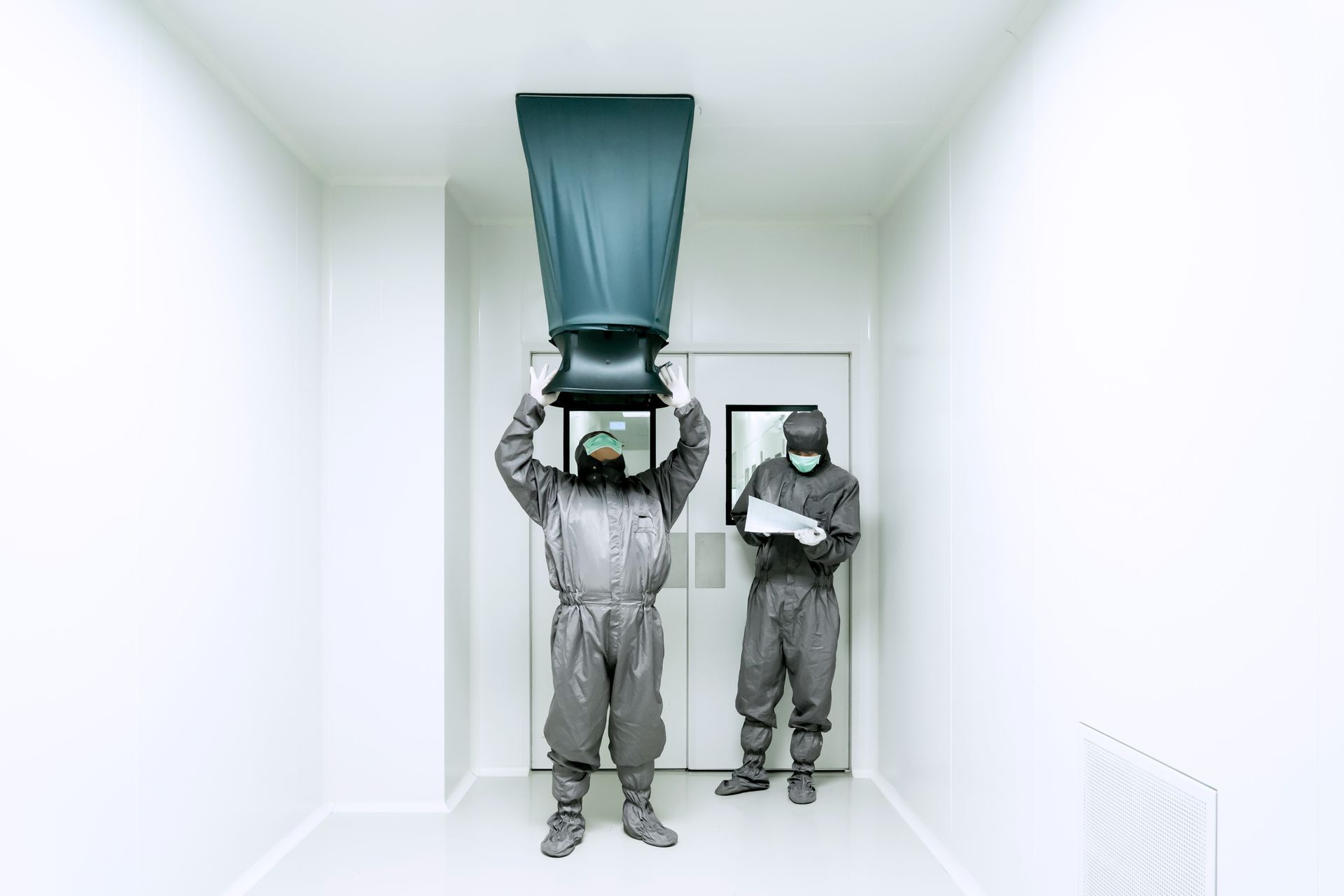
Deep Dive into Filter Leak Testing: Methods, Equipment, and Standards
1 Introduction
Filter leak testing is a critical verification step in cleanroom qualification and ongoing performance monitoring. High-efficiency particulate air (HEPA) and ultra-low particulate air (ULPA) filters form the final barrier between conditioned supply air and the controlled environment. Even a minor leak—caused by gasket failure, frame distortion, sealant defects, or media damage—can compromise ISO 14644 cleanliness, disrupt unidirectional airflow, and elevate contamination risk in GMP-regulated operations.
Standards such as ISO 14644-3 and EU GMP Annex 1 establish the requirement for routine integrity testing of installed filters. A correctly executed test confirms that the filter system, including media, frame, and housing, meets the required capture efficiency and that no bypass routes exist. Understanding the testing methods, equipment, and acceptance criteria is essential for designers, commissioning teams, and operators seeking robust contamination control.
2 Principles of HEPA and ULPA Filter Integrity
HEPA and ULPA filters rely on diffusion, interception, and inertial impaction mechanisms to remove particles typically between 0.1 µm and 5 µm. While manufacturing test efficiency ensures media performance, installed performance depends equally on the integrity of the filter–housing interface.
Common leak points include:
- Gasket compression loss due to ageing or incorrect torque
- Frame deformation from overtightening or thermal expansion
- Sealant cracks within the media–frame bond line
- Localised media defects caused by impact or fatigue
Integrity testing aims to reveal these faults in situ under operating airflow, ensuring real-world performance rather than relying solely on factory testing.
3 Standards Governing Filter Leak Testing
ISO 14644-3 remains the primary international reference. It specifies aerosol challenge, measurement techniques, and allowable leakage thresholds.
Key complementary standards and guidance include:
- EN 1822 for classification of HEPA/ULPA filters and factory scan testing
- EU GMP Annex 1 for required frequency of integrity testing in Grade A/B environments
- ISO 8573 where compressed air systems introduce aerosol challenges
- Facility-specific SOPs defining acceptance criteria consistent with regulatory expectations
ISO 14644-3 stipulates that installed filters must undergo leak testing during initial qualification, after maintenance that affects the filter or housing, and at defined operational intervals.
4 Aerosol Challenge Methods
Two primary aerosol challenge methods are used: upstream aerosol injection and tracer aerosol introduction via the air-handling system. Both require uniform upstream concentration and stable airflow.
Upstream Injection
Aerosol is introduced directly upstream of the filter, typically into a duct, plenum, or housing access port. This method is preferred for systems with adequate mixing lengths and predictable airflow.
System-Level Introduction
Where no injection port exists, aerosol may be introduced into the AHU or upstream ductwork. While effective, this method requires careful verification that aerosol distribution is uniform and that losses to duct surfaces are minimal. ISO 14644-3 highlights the need to validate uniformity before scanning.
5 Test Aerosols
Aerosol selection affects test reliability and compliance.
PAO/AO (Polyalphaolefin/Aerosol Oil)
Widely used as a DOP alternative, PAO meets safety requirements and produces droplets within the required size distribution (typically 0.1–0.3 µm mass median diameter). Compatible with most HEPA systems.
Emery 3004 or DEHS
Used extensively in Europe, DEHS generates stable aerosols with narrow particle size distributions. It provides excellent repeatability for ULPA filters.
Salt Aerosols (NaCl, KCl)
Used in specific applications or where hot-wire detection is preferred. Salt aerosols are more common in factory testing environments.
Test aerosols must be non-reactive, stable, and capable of producing adequate upstream concentration without overloading or damaging the filter.
6 Required Test Equipment
Filter leak testing relies on calibrated instruments capable of detecting small variations in downstream concentration.
Aerosol Generators
Thermal or pneumatic generators create a stable challenge aerosol. Output rate must match system airflow to achieve the required upstream concentration, often 10–20 µg/L for HEPA filters.
Photometers
ISO 14644-3 recognises photometers for leak detection, particularly for HEPA filters. They provide real-time concentration readings with rapid response times. Their limit of detection suits gross and pinhole leaks but may not detect ultrafine defects in ULPA media.
Particle Counters
Required for ULPA filters or when high sensitivity is needed. Particle counters capable of measuring at or near the Most Penetrating Particle Size (MPPS) provide quantitative assessment of leakage and local penetration.
Scanning Probes
Handheld scanning wands or fixed scanning heads allow systematic movement across filter surfaces, gaskets, and frames. Probe design must maintain consistent isokinetic sampling.
Upstream/Downstream Sampling Ports
Permanent or temporary ports ensure repeatability and minimise system disturbance. Port placement follows ISO 14644-3 recommendations to avoid turbulence zones.
7 Execution of the Leak Test
A compliant procedure ensures repeatability and reliable detection of defects.
Establish Operating Conditions
Testing must occur at nominal airflow and temperature. Deviations affect aerosol transport and pressure differentials.
Verify Upstream Concentration
Upstream challenge must be stable and within prescribed limits. Low concentrations may mask leaks; excessively high concentrations may overload instruments.
Perform Downstream Scanning
Operators scan the entire filter face at a consistent rate—typically 3–5 cm/s—and at a distance close enough to detect local leaks without disturbing airflow. Areas needing special attention include:
- Filter corners
- Gasket perimeters
- Fixing points and mounting frames
- Media pleat ends
Identify and Quantify Leaks
Photometer-based methods compare downstream to upstream concentration, with a typical acceptance threshold of ≤0.01% penetration for HEPA filters (or as defined by local SOPs). Particle counter criteria often rely on absolute particle counts or penetration percentages at MPPS.
Document Results
Reports detail aerosol type, concentration, airflow, instrument calibration, scan pattern, leak locations, and corrective actions. Traceability is essential for regulatory audits.
8 Interpretation of Results and Remediation
If leaks are detected, corrective action must follow a structured approach.
Gasket or Frame Leaks
Often corrected by adjusting clamps, reseating the filter, or replacing gaskets. Housing flatness and torque uniformity should be verified.
Media Defects
Localised patches may be permitted in some non-critical systems, provided re-testing confirms integrity. GMP environments typically require full filter replacement.
Sealant Failures
Cracks or voids in potting require filter replacement, as field repair is unreliable.
After any corrective action, a full re-test of the affected filter is mandatory.
9 Frequency of Filter Leak Testing
ISO 14644-3 does not prescribe fixed intervals, but industry practice and GMP Annex 1 provide guidance.
Typical frequencies include:
- Annually for most ISO-classified cleanrooms
- Semi-annually for Grade A/B areas or high-risk processes
- After maintenance affecting filters, housings, plenums, or airflow
- After contamination excursions suggesting possible filter integrity compromise
Facilities may establish risk-based frequencies, considering process criticality, occupancy, and environmental monitoring trends.
10 Integration with Overall Cleanroom Performance
Leak testing is part of a broader qualification framework including airflow visualisation, recovery testing, pressure cascade verification, and environmental monitoring.
Filter integrity data should be reviewed alongside:
- Particle counts during operation
- Microbiological trends
- Pressure stability records
- Maintenance logs and failure reports
This integrated approach ensures that filter performance is not assessed in isolation but within the context of overall cleanroom control.
11 Conclusion
Filter leak testing is a foundational component of cleanroom qualification and ongoing compliance. By understanding the methods, equipment, and standards governing HEPA and ULPA integrity testing, cleanroom operators can ensure robust barrier performance, maintain ISO and GMP classification, and protect both product and process integrity.
A rigorous testing program—supported by calibrated instruments, validated procedures, proper aerosol selection, and thorough documentation—provides confidence that filtration systems continue to operate as designed. In every sector requiring controlled environments, from pharmaceuticals to microelectronics, effective filter leak testing remains essential to contamination control.
Read more here: About Cleanrooms: The ultimate Guide