Design Considerations for High-Containment Cleanrooms (BSL-3/BSL-4)
Design Considerations for High-Containment Cleanrooms (BSL-3/BSL-4)
1. Introduction
High-containment cleanrooms operating at BSL-3 and BSL-4 sit at the intersection of cleanroom engineering, biosafety, and high-reliability facility design. Unlike conventional ISO-classified cleanrooms that primarily protect product, BSL-3/4 facilities must simultaneously protect personnel, environment, and product from highly infectious (and in some cases life-threatening) biological agents.
This article outlines key engineering and architectural design considerations for high-containment cleanrooms, focusing on airflow, pressure regimes, containment barriers, decontamination systems, and integration with ISO 14644-style cleanroom performance where product protection is also required (e.g., vaccine or biologics manufacturing).
2. Dual Objectives: Containment and Cleanliness
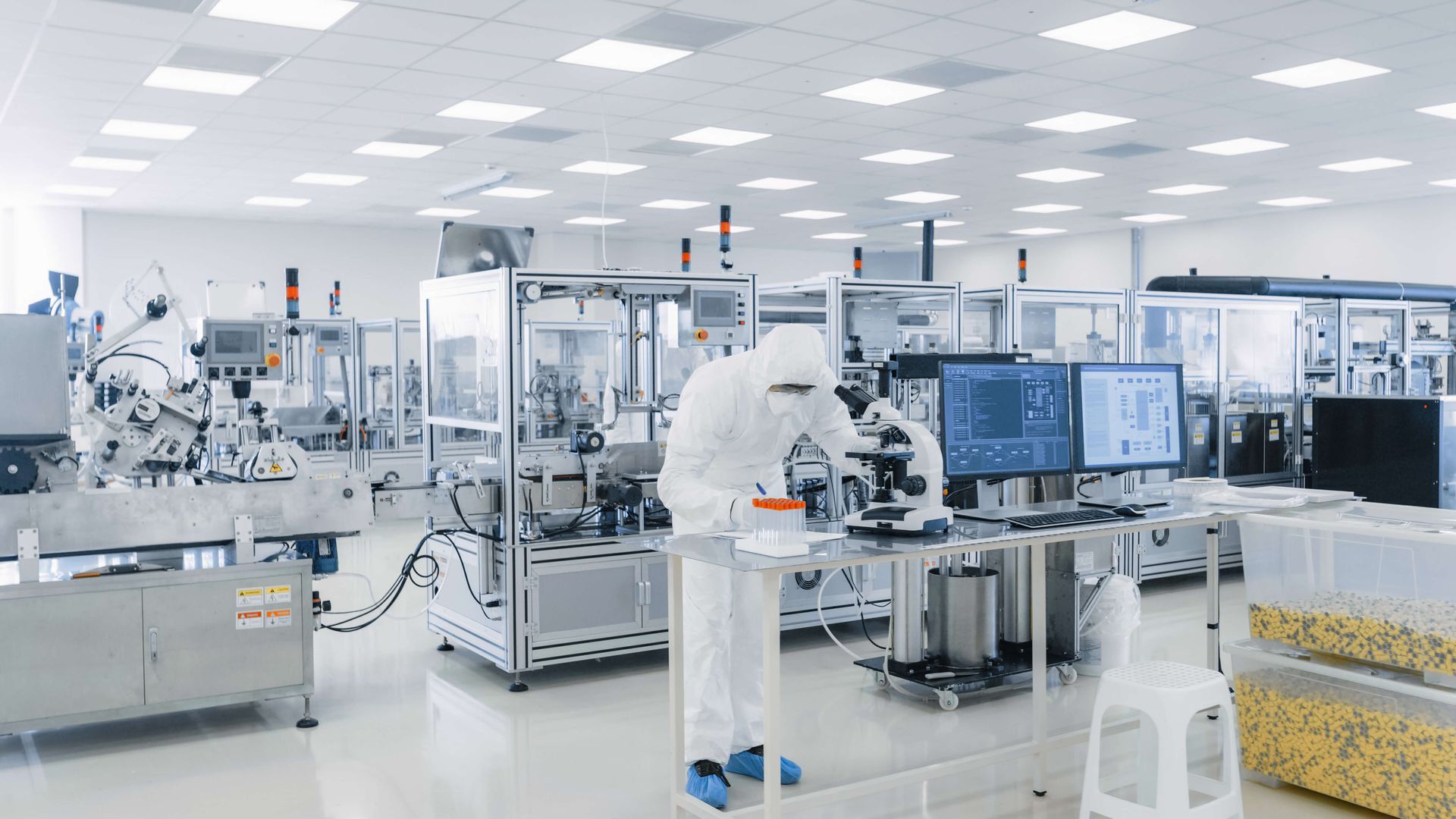
BSL-3 and BSL-4 facilities often function as containment cleanrooms, where the primary objective is to prevent escape of hazardous agents, while in some applications also maintaining defined ISO cleanliness levels for process quality.
Core design objectives include:
- Containment: Maintain negative pressure relative to surrounding areas; ensure all air is appropriately filtered and/or treated.
- Product protection: Where needed, achieve ISO-classified environments for aseptic processing or contamination-sensitive work.
- Personnel protection: Provide safe, ergonomic working conditions with well-defined PPE strategies.
- Environmental protection: Ensure no unfiltered or untreated discharge of hazardous agents to the external environment.
Design must reconcile sometimes competing needs (e.g., negative pressure for containment vs. unidirectional flow for product protection) using zoning, isolators, or secondary containment concepts.
3. Zoning, Layout, and Functional Flows
Effective zoning is fundamental to high-containment design.
Key layout principles:
- Clear containment boundary: A well-defined perimeter separates containment from non-containment areas, typically with pressure gradients more negative towards the highest-risk rooms.
- Personnel flow: Linear, with staged entry and exit sequences (change rooms, PPE donning/doffing, showers where required at BSL-4).
- Material flow: Segregated entry and exit paths with dedicated airlocks, pass-through autoclaves, or chemical dunk tanks/kill tanks as appropriate.
- Segregation of clean and dirty workflows: Avoid crossing paths between incoming sterile items and outgoing contaminated waste.
- Support spaces: Equipment rooms, mechanical spaces, and decontamination areas located to allow service access from the non-containment side wherever possible.
Workflow and zoning must be documented in the facility’s biosafety risk assessment and contamination control strategy.
4. Pressure Regimes and Airflow Concepts
Unlike standard cleanrooms that operate under positive pressure, BSL-3 and BSL-4 suites are designed as negative-pressure facilities.
Design considerations:
- Pressure cascade:
- Surrounding areas (e.g., corridors) at higher pressure than containment rooms.
- Most negative pressures usually in rooms with highest risk procedures (e.g., aerosol generation, animal work).
- Typical room-to-room differentials in the range of –10 to –30 Pa, with overall suite negative pressure relative to building.
- Airflow direction: Always from low-risk to high-risk areas, and from clean support zones towards laboratories and animal rooms.
- Exhaust dominance: Exhaust airflow intentionally exceeds supply to maintain negative pressure; leakage paths (doors, penetrations) are controlled and validated.
- Air change rates (ACH): Frequently higher than in conventional labs; design often targets ≥12 ACH for BSL-3 and higher for certain BSL-4 or animal rooms, adjusted based on heat loads and risk.
Where both containment and product cleanliness are needed, localized unidirectional airflow devices, biosafety cabinets (BSCs), or isolators are used to provide ISO-class environments within a negative-pressure room.
5. Filtration and Air Treatment
Filtration is central to preventing environmental release of hazardous agents.
Key elements:
- HEPA filtration of exhaust: All exhaust air from BSL-3 and BSL-4 areas passes through at least one stage of HEPA filters, with many BSL-4 designs using two HEPA stages in series housed in validated, testable housings.
- Supply air treatment:
- Typically HEPA-filtered when product or surface cleanliness is required.
- For containment-only spaces, supply may be prefiltered and temperature/humidity-controlled but not always HEPA-filtered unless risk assessment requires it.
- Filter housings:
- Must be designed for safe filter change (bag-in/bag-out systems) to avoid operator exposure.
- Must provide ports for in-situ HEPA integrity testing (e.g., PAO/DEHS challenge).
- Redundancy:
- Critical exhaust fans commonly configured in N+1 redundancy with automatic switchover.
- Failure scenarios must be addressed through emergency power, dampers, and safe-shutdown procedures.
Filter system design must be tightly integrated with airflow balance and pressure control strategies.
6. Building Envelope Integrity and Containment Barriers
High-containment cleanrooms require a gas-tight or near gas-tight envelope to ensure containment.
Architectural considerations:
- Sealed construction:
- Continuous, sealed wall and ceiling systems; penetrations (pipes, conduits, ducts) carefully sealed with compatible materials.
- Monolithic or tightly joined floor systems with continuous coved skirting.
- Door systems:
- Airtight doors with robust gasketing and threshold seals.
- Interlocks for airlocks (personnel and material), preventing simultaneous opening of opposing doors.
- Leak testing:
- Room integrity verified via pressure decay or tracer gas tests as appropriate.
- Envelope performance should be re-verified periodically and after significant modifications.
- Windows and glazing:
- Limited and appropriately sealed; often double-glazed with integral blinds on the safe side.
Envelope quality directly impacts required exhaust volumes, system energy consumption, and the reliability of pressure cascades.
7. Decontamination Systems and Waste Handling
Facilities handling high-risk biological agents must safely inactivate contaminants before discharge.
Typical systems:
- Effluent decontamination:
- Thermal (heat-based) effluent decontamination systems (EDS) for liquid waste streams.
- Chemical treatment systems where applicable, with validated contact times and mixing.
- Solid waste:
- Pass-through autoclaves at the containment boundary.
- Dedicated waste handling routes, with appropriate bagging and secondary containment.
- Room or area decontamination:
- Fixed or mobile vaporized hydrogen peroxide (VHP) or other gaseous decontamination systems for rooms, isolators, and BSCs.
- Design must include compatible materials, sealing provisions, and venting strategies.
- Spill management:
- Built-in floor drainage strategies (where used) must include traps and decontamination capabilities.
- SOPs and materials for rapid spill response must be compatible with finishes and effluent systems.
Decontamination systems must be validated, and their capability documented within the biosafety management system.
8. Integration of Cleanroom and Biosafety Standards
While ISO 14644 provides a framework for air cleanliness, biosafety standards and guidelines (e.g., WHO, CDC/NIH BMBL, national biosafety regulations) define containment expectations.
Integration strategies:
- Define which rooms or work zones require specific ISO classes (e.g., ISO 7 background with ISO 5 BSC or isolator) while maintaining negative pressure relative to adjacent spaces.
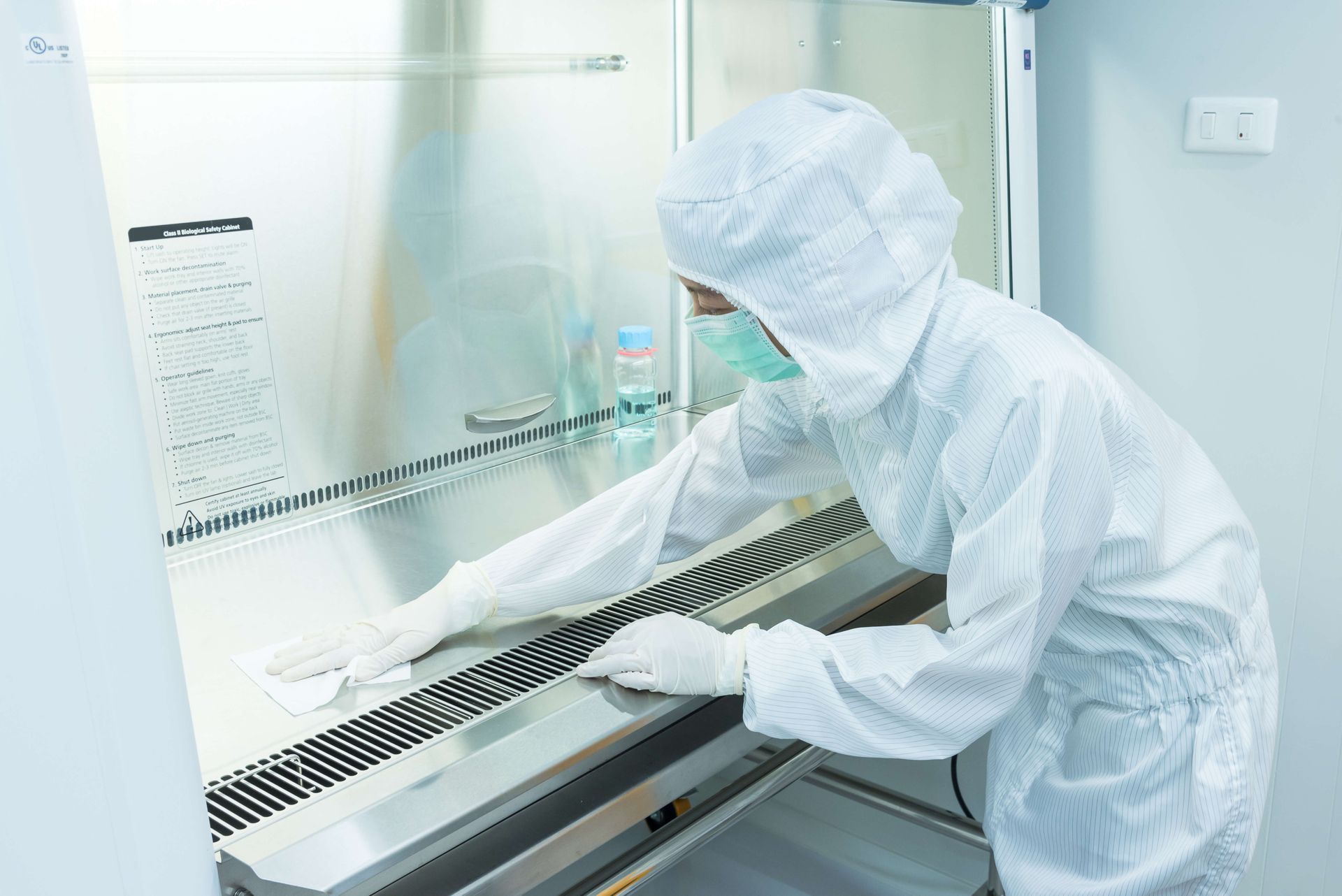
- Use primary containment devices (Class II/III BSCs, isolators) to provide product protection and personnel protection within a BSL-3 or BSL-4 envelope.
- Align qualification and monitoring routines with both sets of expectations, e.g.:
- ISO 14644-based particle counts for cleanroom performance.
- Biosafety commissioning and certification (e.g., BSC testing, containment verification, HEPA integrity tests, pressure testing).
Design documentation should show explicit cross-links between ISO-based cleanroom performance criteria and biosafety requirements.
9. Control and Monitoring Systems
High-containment facilities require robust monitoring and control to maintain safe operation.
Key elements:
- Continuous pressure monitoring between rooms and relative to non-containment areas, with trend logging and alarm functions.
- Airflow status and fan monitoring, including exhaust fan interlocks and automatic dampers to maintain safe conditions during failures.
- Integration with Building Management System (BMS) and Environmental Monitoring Systems (EMS):
- Alarm prioritization for loss of negative pressure, fan failure, HEPA filter differential pressure excursions, and door interlock failures.
- Emergency modes:
- Defined sequences for power loss, fire, and evacuation.
- Fail-safe damper positions and default airflow paths to prioritize containment.
Control strategies must be validated during commissioning and OQ (operational qualification), with clear SOPs for response to alarms and excursions.
10. Personnel and Material Airlocks
Airlocks are critical interfaces for maintaining containment while allowing necessary movement.
Design features:
- Personnel airlocks (PALs):
- Multi-stage change rooms with defined zones for street clothes, facility clothing, and PPE.
- For BSL-4, often includes mandatory showers on exit, with design to prevent bypass.
- Material airlocks (MALs):
- Segregated paths for clean materials in and contaminated materials out.
- Pass-through autoclaves or chemical decontamination chambers at the containment boundary.
- Pressure gradients within airlocks:
- Carefully designed setpoints to ensure flow from “clean” to “dirty” directions, aligned with overall containment cascade.
- Interlocks and controls:
- Door interlocking to prevent undesired open-door combinations.
- Visual indicators of pressure status and door permission states.
Airlock design must reflect operational throughput needs without compromising containment.
11. Qualification, Commissioning, and Periodic Re-Verification
High-containment cleanrooms require rigorous lifecycle qualification and re-certification.
Typical activities:
- Commissioning:
- Verification of HVAC, control systems, alarms, autoclaves, and effluent decontamination under static and dynamic conditions.
- Qualification (DQ–IQ–OQ–PQ):
- DQ: Demonstrate that design meets biosafety and cleanroom requirements.
- IQ: Confirm installation of all containment features, filters, and systems as designed.
- OQ: Verify pressure cascades, airflow patterns, HEPA integrity, envelope leak tightness, decontamination systems, and control logic.
- PQ: Demonstrate stable performance under real operational conditions, including mock or actual process simulations.
- Periodic re-verification:
- Annual or more frequent HEPA integrity testing, pressure verification, BSC certification, and functional checks of decontamination systems.
- Envelope leak tests and system stress tests at defined intervals.
All results must be meticulously documented to support biosafety approvals and regulatory inspections.
12. Conclusion
Designing high-containment cleanrooms at BSL-3 and BSL-4 levels demands a sophisticated integration of containment engineering, cleanroom design, and biosafety principles. Robust zoning, negative-pressure cascades, HEPA-filtered exhaust, tight architectural envelopes, validated decontamination systems, and resilient control architectures are core to safe and compliant operation.
By addressing these design considerations systematically and aligning them with both ISO 14644 and biosafety guidance, organizations can construct facilities that protect personnel, the environment, and products while enabling advanced research and manufacturing involving high-consequence biological agents.
Read more here: About Cleanrooms: The ultimate Guide