Selecting Surface Disinfection Technologies: UV-C, H₂O₂, Ozone, and More
Selecting Surface Disinfection Technologies: UV-C, H₂O₂, Ozone, and More
Introduction
Surface disinfection is a critical component of contamination control in cleanrooms, whether operating under ISO 14644, GMP, or biosafety guidance. Correct technology selection affects microbial reduction efficacy, material compatibility, operator safety, and overall environmental stability.
Modern facilities employ a mix of manual and automated methods, often integrating chemical disinfectants with engineered systems such as UV-C, vaporised hydrogen peroxide (VHP/H₂O₂), and ozone.
This article provides a technical, engineering-driven comparison of surface disinfection methods, focusing on performance characteristics, application constraints, equipment considerations, and cleanroom suitability. The objective is to support disciplined selection of disinfection technologies aligned with validated procedures and contamination control strategies (CCS).
1. Principles of Surface Disinfection in Controlled Environments
Effective surface disinfection requires reducing viable microorganisms on critical surfaces to an acceptable and validated level.
Key considerations include:
- Spectrum of activity (bacteria, spores, fungi, viruses)
- Material compatibility (stainless steel, polymers, elastomers)
- Repeatability and automation potential
- Residue formation and removal requirements
- Occupational health and ventilation constraints
- Ability to integrate into routine SOPs and periodic deep-clean programs
Disinfection methods must be supported by documented validation, including kill efficacy (log reduction), exposure parameters, and recovery testing where applicable.
2. UV-C Disinfection (200–280 nm)
UV-C systems are widely used as a supplemental, non-chemical disinfection technology in cleanrooms.
2.1 Mechanism and Performance
UV-C inactivates microorganisms by damaging nucleic acids, preventing replication.
Typical performance depends on:
- Wavelength (often 254 nm)
- Intensity and exposure duration
- Distance to surface and shadowing
- Lamp or LED output degradation over time
UV-C is effective against vegetative bacteria, viruses, and fungi. Sporicidal efficacy is possible but requires higher doses and longer exposure.
2.2 Engineering Considerations
- Line-of-sight requirement: UV-C cannot disinfect shadowed surfaces; placement must eliminate obstruction.
- Surface reflectivity: Stainless steel enhances dose uniformity; matte surfaces reduce efficacy.
- Airflow interactions: High airflow near lamps can reduce surface dose due to turbulence.
2.3 Advantages
- No residues
- Short cycle times
- Suitable for routine supplemental disinfection
- Compatible with most cleanroom materials
2.4 Limitations
- Not a replacement for chemical wipe-downs
- Limited sporicidal activity without extended exposure
- Requires safety interlocks to prevent operator exposure
UV-C is best used as a preventive tool rather than a primary terminal sterilisation method.
3. Vaporised Hydrogen Peroxide (VHP / H₂O₂)
VHP is one of the most powerful and widely validated automated surface disinfection technologies in GMP facilities.
3.1 Mechanism and Performance
H₂O₂ vapour or micro-condensation oxidises cellular components, providing:
- Broad-spectrum sporicidal efficacy
- Consistent log reductions when parameters are controlled
- Compatibility with ISO 14644 cleaning and GMP decontamination expectations
Typical cycles include conditioning, injection, dwell, and aeration phases.
3.2 Engineering Considerations
- Concentration control: 200–1200 ppm depending on cycle design
- Humidity management: Relative humidity affects condensation behaviour and kill efficacy
- Distribution modelling: Computational or biological indicators used to validate uniformity
3.3 Advantages
- High-level sporicidal capability
- Automated, repeatable, and programmable cycles
- Suitable for isolators, pass-throughs, small cleanrooms
- Validatable with biological indicators
3.4 Limitations
- Material compatibility concerns (elastomers, anodised surfaces)
- Requires controlled aeration and catalytic breakdown
- Cycle times can be long in large rooms
- Not suitable for rooms with high permeability or excessive leak paths
VHP is often used for deep-cleaning, pre-operational decontamination, and isolator bio-decontamination.
4. Hydrogen Peroxide Aerosol / Dry Mist Systems
These systems disperse a fine aerosol of H₂O₂ droplets without achieving full vapour saturation.
4.1 Mechanism and Performance
- Produce micro-droplets that settle onto surfaces
- Efficacy depends on droplet distribution, humidity, and concentration
- Sporocidal performance can approach VHP but is typically less consistent
4.2 Engineering Considerations
- Droplet size must be controlled to prevent condensation and streaking
- Nozzle placement determines coverage uniformity
- Requires validated air handling to manage residual peroxide
4.3 Advantages
- Faster cycles than VHP
- Less material stress
- Lower equipment cost and simple deployment
4.4 Limitations
- Potential for surface wetting
- Sensitivity to room geometry
- Lower reproducibility than VHP in complex spaces
Dry-mist H₂O₂ is appropriate for mid-level automated disinfection where full VHP validation is not required.
5. Ozone (O₃) Disinfection
Ozone is a strong oxidising agent used in some specialised decontamination applications.
5.1 Mechanism and Performance
Ozone destroys microorganisms by oxidising membranes and intracellular components. It is effective against bacteria, fungi, and spores at sufficient concentrations (5–20 ppm for extended periods).
5.2 Engineering Considerations
- Ozone must reach a controlled concentration uniformly across the space
- Requires ozone-resistant materials (PTFE, stainless steel)
- Must be fully broken down (typically via catalytic destruction) before re-entry
- Highly reactive; must not interact with process components or sensitive equipment
5.3 Advantages
- Strong oxidizing capability
- Penetrates into hard-to-reach areas
- No chemical residues after decomposition
5.4 Limitations
- Significant material compatibility risks
- Slower aeration than H₂O₂
- Highly regulated due to toxicity
- Not widely used in pharmaceutical GMP spaces
Ozone is more common in industrial or laboratory environments rather than high-grade cleanrooms.
6. Alcohols and Quaternary Ammonium Compounds (QACs)
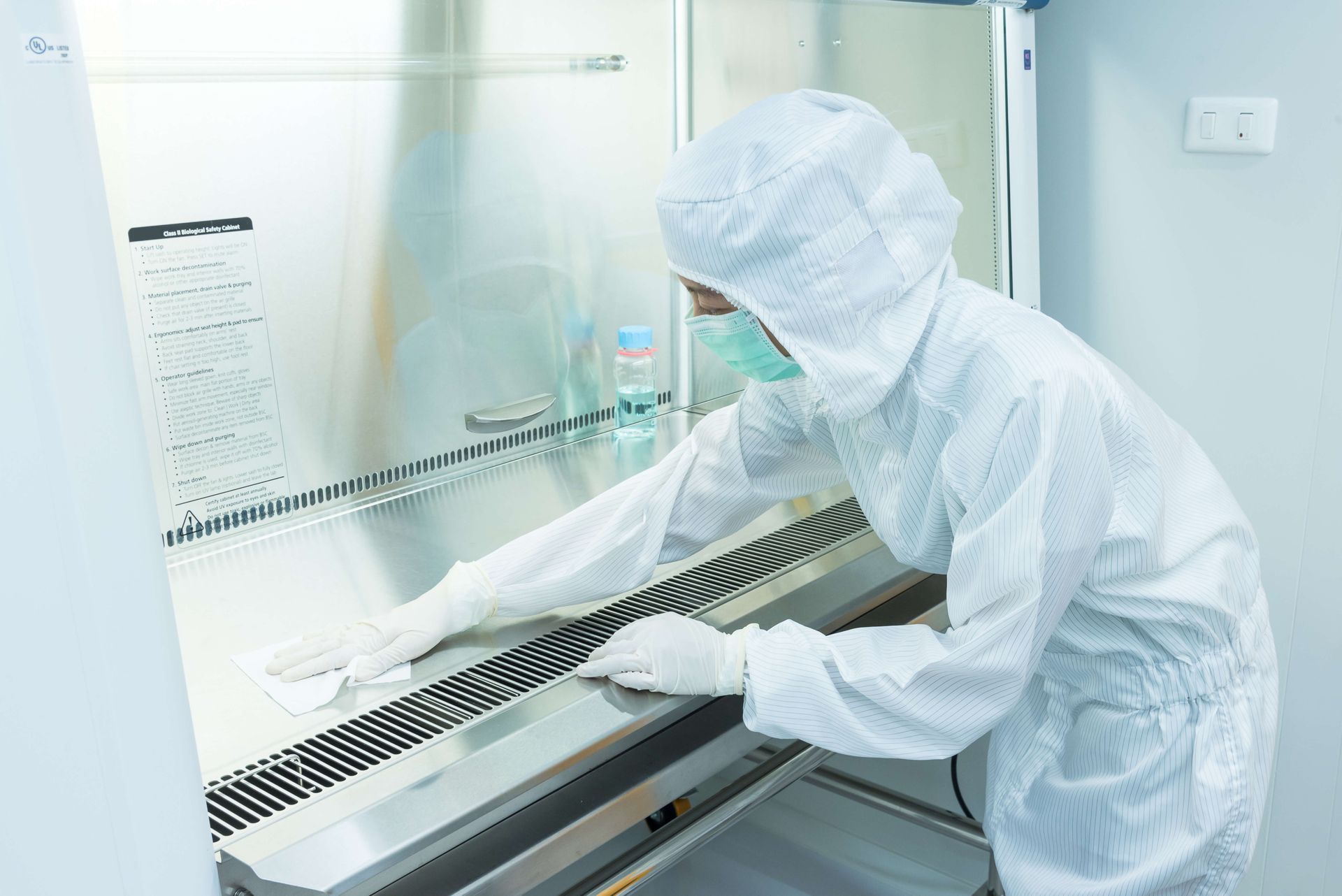
These chemical disinfectants remain a foundation of manual cleaning programs.
6.1 Alcohols (e.g., IPA, ethanol)
- Rapid kill of vegetative organisms
- Not sporicidal
- Evaporate quickly, leaving no residue
- Common in wipe-down and intermediate disinfection steps
6.2 QACs
- Good efficacy against bacteria and some fungi
- Limited sporicidal activity
- Can leave residues requiring periodic rinsing
- Useful for routine non-critical surfaces
Manual disinfectant use must follow rotation strategies to prevent microbial resistance and be supported by validation demonstrating wet contact time and coverage.
7. Peracetic Acid (PAA) Systems
PAA is a powerful oxidising disinfectant used in some automated room systems and manual applications.
7.1 Performance Characteristics
- Broad-spectrum including spores
- Works in presence of organic load
- Distinct odour and corrosiveness require safety controls
7.2 Application Considerations
- Material compatibility assessment required
- Ventilation must ensure proper off-gassing
- Often used in high-risk biological facilities and decontamination chambers
8. Comparing Technologies for Cleanroom Applications
When selecting a disinfection technology, consider the following engineering criteria:
8.1 Efficacy Requirements
- Routine cleanroom: alcohols, QACs, UV-C
- High-risk or terminal disinfection: VHP, PAA
- Specialized non-GMP environments: ozone
8.2 Room and Equipment Compatibility
- Sensitive electronics: avoid ozone and high-H₂O₂ loads
- Polymer-rich environments: test VHP and PAA compatibility
- Large rooms: assess cycle times for VHP vs. aerosolised H₂O₂
8.3 Operational Integration
- Do operators remain in the room? → UV-C must be interlocked; VHP/ozone require evacuation
- Is automation needed? → VHP/aerosol systems provide repeatability
- Are short cycle times critical? → UV-C or manual disinfectants
8.4 Validation and Documentation
- VHP is the most validation-friendly method due to established biological indicator practices
- Manual disinfectants require documented coverage, wet contact time, and rotation
- UV-C validation depends on dose mapping and lamp output measurement
9. Role of Disinfection Within a Contamination Control Strategy (CCS)
Disinfection technology selection must align with the CCS, which defines:
- Target microorganisms and risk zones
- Frequency and sequence of disinfection steps
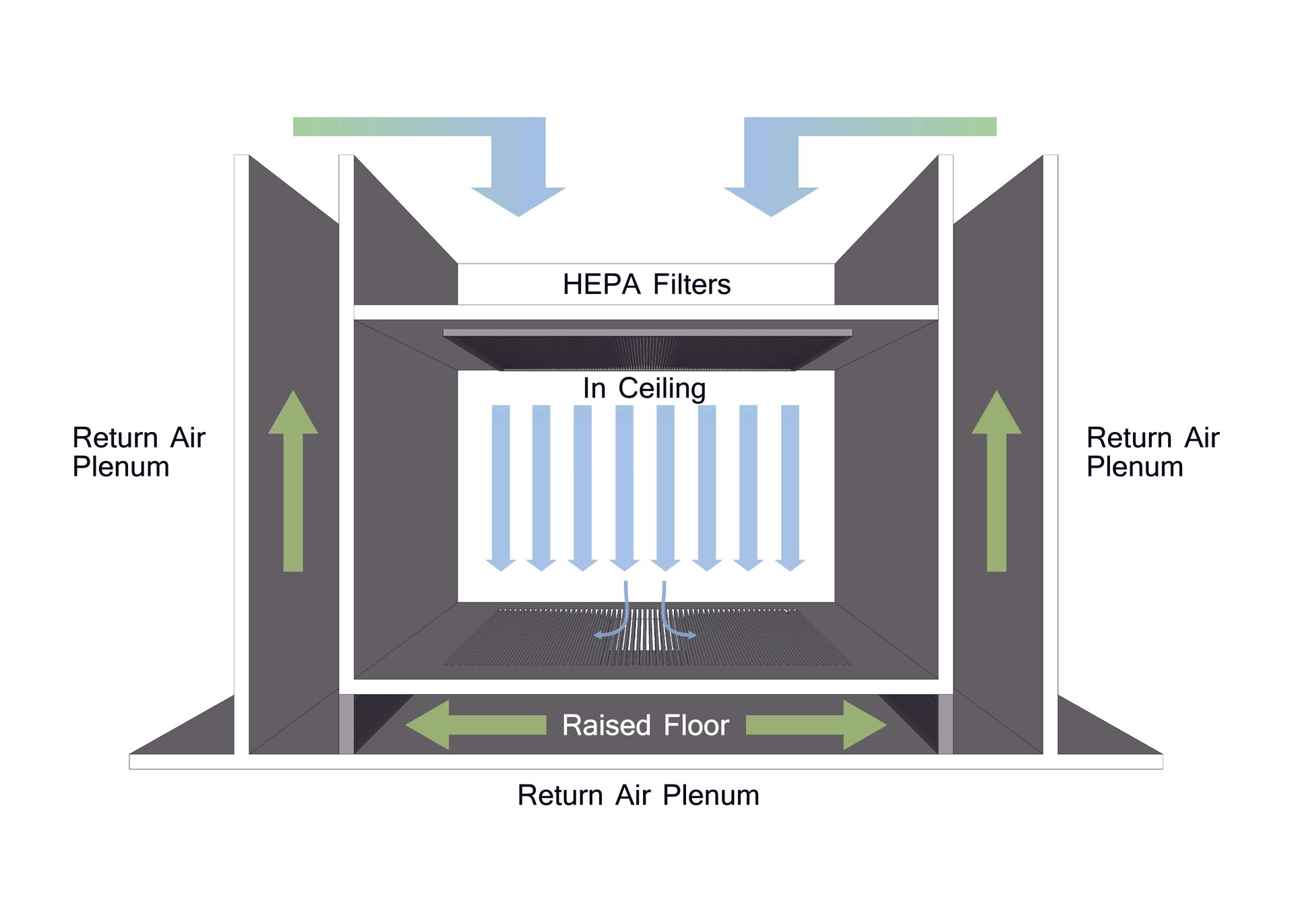
- Integration with HVAC and airflow controls
- Material and equipment compatibility
- Validation requirements and acceptance criteria
Using multiple complementary technologies—e.g., manual disinfectants + UV-C + periodic VHP—provides robust multi-barrier contamination protection.
Conclusion
Selecting an appropriate surface disinfection technology requires understanding microbial kill mechanisms, material compatibility, room geometry, operator safety, and validation requirements. UV-C offers rapid, residue-free supplemental disinfection; VHP provides highly reliable sporicidal performance; aerosolised H₂O₂ delivers a practical mid-tier solution; ozone offers strong oxidation but with significant safety and compatibility limits; and manual chemical disinfectants remain the backbone of routine operation.
By evaluating these technologies within a structured engineering and GMP framework, cleanroom operators can design a disinfection strategy that is effective, validated, and aligned with the facility’s contamination control objectives.
Read more here: About Cleanrooms: The ultimate Guide