Contamination Control in Additive Manufacturing Environments
Managing Powders, Particles, Residues, and Process Interfaces in Controlled Additive Manufacturing Facilities
Contamination Control in Additive Manufacturing Environments
Introduction
Additive manufacturing introduces contamination-control challenges that differ significantly from those encountered in conventional cleanroom production. Processes such as powder bed fusion, material extrusion, vat photopolymerization, and directed energy deposition involve feedstocks, thermal processes, moving equipment, support removal, and extensive post-processing. Each stage can generate particles or residues capable of affecting product quality, equipment performance, or subsequent manufacturing operations.
For industries such as medical devices, aerospace, electronics, and precision engineering, contamination management therefore extends beyond maintaining a classified cleanroom. It requires control of feedstock condition, material segregation, equipment cleanliness, personnel practices, airflow, surface contamination, and the transfer of parts between manufacturing and post-processing stages.
ISO 14644 provides the framework for controlling cleanroom particle and surface cleanliness, while ISO/ASTM additive manufacturing standards address production-site qualification, powder characterization, and manufacturing process control. ISO/ASTM 52920:2023, for example, establishes quality-related requirements for industrial additive manufacturing production sites and process activities.
1.1 Understanding Contamination Sources in Additive Manufacturing
Contamination in additive manufacturing can originate from the process material itself, the production environment, equipment, personnel, or another manufacturing campaign.
Typical contamination sources include:
- Metallic or polymer powders
- Condensate and process-generated particulates
- Residual support material
- Cleaning media
- Lubricants and machine fluids
- Personnel-generated particles
- Fibres from wipes or garments
- Residues from previous materials
- Airborne environmental contamination
The critical contamination mechanism depends on the process. In powder bed fusion, contamination between different powder alloys may alter feedstock chemistry. In medical-device manufacturing, residual powder trapped within internal channels or porous structures can create additional cleaning and product-quality concerns.
Contamination control should therefore be based on process-specific risk assessment rather than on cleanroom classification alone.
1.2 Powder Management as a Primary Control Point
Metal powder bed fusion requires particularly disciplined material handling. Powders may undergo storage, loading, printing, sieving, recovery, blending, sampling, and reuse before retirement.
Each transfer operation creates opportunities for foreign material to enter the powder stream.
A robust powder-management program should control:
- Material identification
- Supplier and batch information
- Storage conditions
- Container cleanliness
- Powder transfer
- Sieving
- Recovery
- Reuse history
- Sampling
- Disposal
ISO/ASTM 52907 addresses characterization of metallic powders for additive manufacturing and includes documentation, chemical composition, particle characteristics, contamination, packaging, storage, and considerations for used powder.
For facilities processing several alloys, segregation is especially important. Powders with similar appearance cannot be reliably distinguished visually, making labeling, closed handling systems, dedicated tooling, and procedural controls essential.
1.3 Preventing Cross-Contamination Between Materials
Multiproduct additive manufacturing facilities may operate stainless steels, titanium alloys, cobalt-chromium alloys, aluminium alloys, nickel-based superalloys, or polymers within the same production area.
Cross-contamination can occur through:
- Shared sieving equipment
- Reusable powder containers
- Vacuum systems
- Brushes and hand tools
- Machine cleaning operations
- Personnel garments
- Work surfaces
- Airborne powder transport
Where the consequences of material carryover are significant, dedicated equipment or validated cleaning procedures should be considered.
Material zoning can further reduce risk. Separate powder preparation, machine loading, unpacking, and recovery areas can prevent unrestricted movement of powders between processes.
1.4 Cleanroom Classification and Airborne Particle Control
ISO 14644-1 classifies cleanrooms according to concentrations of airborne particles within specified particle-size ranges. However, achieving an ISO classification does not automatically demonstrate control of every contaminant relevant to additive manufacturing.
For example, the principal concern in a metal additive manufacturing area may include relatively large process powder particles, chemical contamination, or deposited material rather than only the airborne particles used for ISO classification.
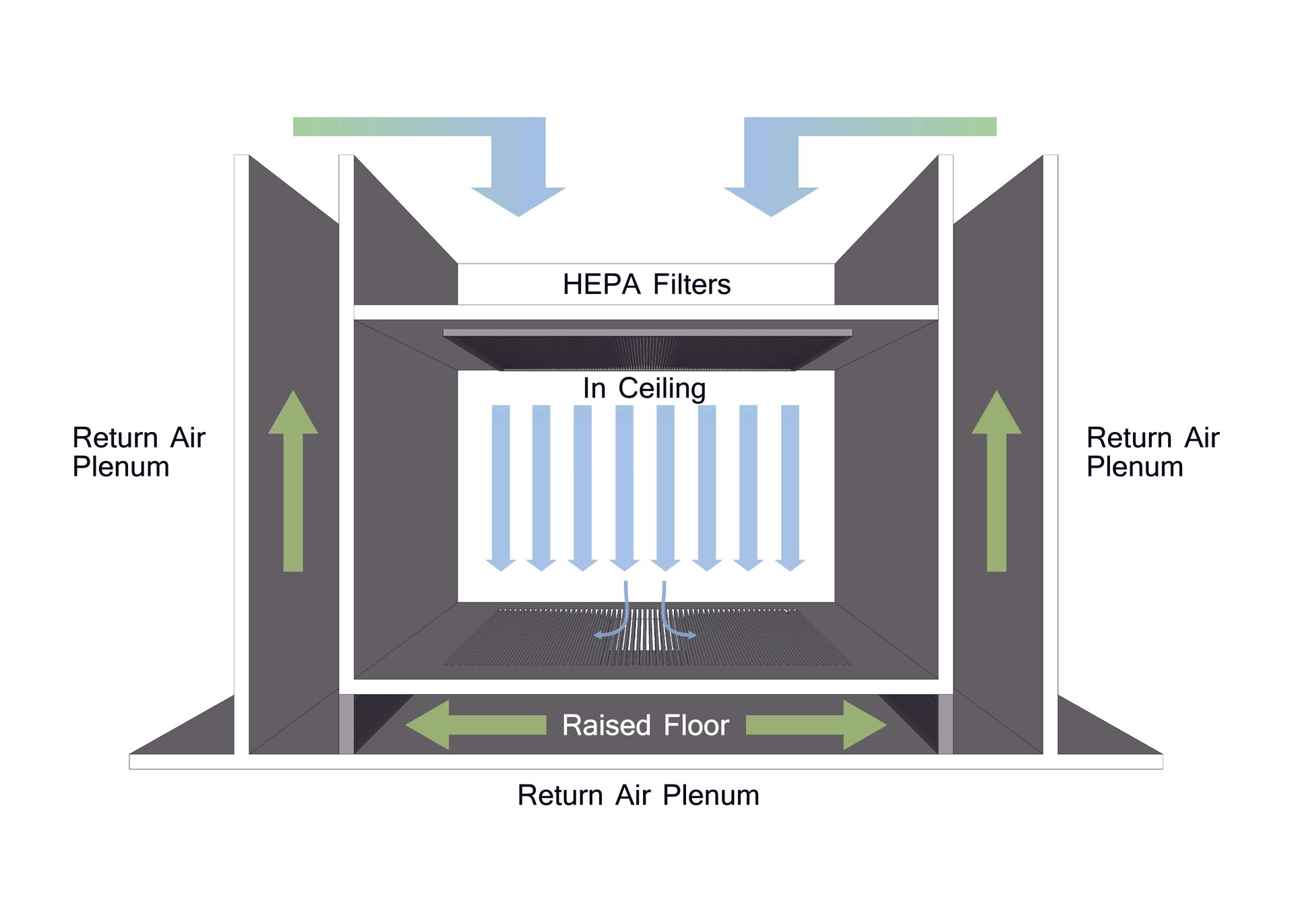
Cleanroom airflow design should therefore consider:
- Particle sources
- Operator locations
- Powder-handling activities
- Machine exhaust
- Local extraction
- Pressure relationships
- Return-air placement
Airflow should prevent contamination generated by powder handling or post-processing from migrating toward cleaner process stages.
1.5 Surface Contamination and Particle Deposition
Contaminants that settle onto work surfaces, fixtures, machines, and components can subsequently be transferred back into the manufacturing process.
Surface cleanliness should therefore form part of the contamination-control program.
ISO 14644-9 provides methods for assessing surface cleanliness by particle concentration, while ISO 14644-17 addresses particle deposition rates on vulnerable surfaces.
These concepts are especially relevant where sensitive build platforms, optical systems, open components, or precision assemblies may be exposed between manufacturing stages.
Monitoring should be targeted at surfaces where contamination could realistically affect the product rather than applied indiscriminately throughout the facility.
1.6 Cleaning Additive Manufacturing Equipment
AM equipment presents substantial cleaning challenges because machines may contain:
- Powder reservoirs
- Recoating mechanisms
- Build chambers
- Extraction ducts
- Filters
- Internal cavities
- Complex mechanical assemblies
Cleaning procedures should define exactly which components require cleaning during routine production, material changeover, maintenance, and major interventions.
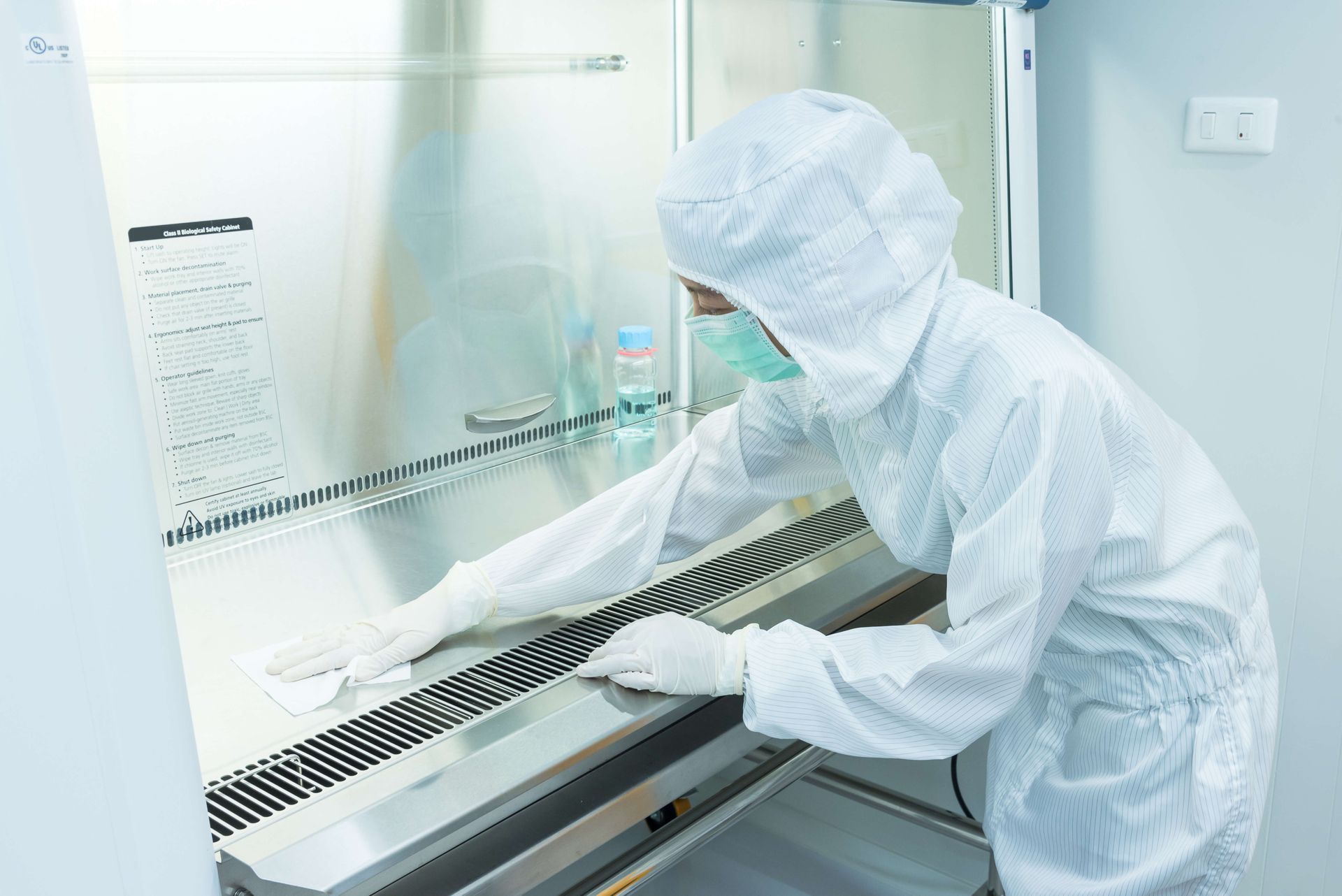
The cleaning method must be compatible with the machine and the contaminant. In controlled environments, cleaning tools themselves must not become contamination sources.
The latest ISO 14644-13:2026 provides guidance for selecting and assessing cleaning approaches for cleanroom surfaces, equipment surfaces, and materials where particle or chemical surface cleanliness is required.
1.7 Managing Residual Powder in Finished Components
Complex additive geometries can contain internal channels, lattice structures, cavities, and porous surfaces in which powder may remain after the build process.
This is particularly important for medical devices and other high-cleanliness applications.
Residual material may need to be removed through combinations of:
- Controlled depowdering
- Vacuum extraction
- Blowing or flushing
- Ultrasonic cleaning
- Mechanical agitation
- Validated aqueous or solvent cleaning
For powder-bed-fused medical devices, ASTM F3335 provides guidance on assessing manufacturing residues and evaluating the effectiveness of removal processes. The FDA recognizes this standard for relevant medical-device applications.
The acceptance criterion should be scientifically justified for the intended product and manufacturing process.
1.8 Equipment Suitability for Controlled Environments
Installing an additive manufacturing machine inside a cleanroom does not automatically make the equipment suitable for cleanroom use.
Equipment may generate particles through:
- Motors
- Bearings
- Recoaters
- Mechanical movement
- Door mechanisms
- Cooling systems
- Maintenance activities
ISO 14644-14:2026 provides a methodology for assessing equipment suitability with respect to airborne particle cleanliness. This can support qualification of manufacturing equipment intended for controlled environments.
Assessment should consider the machine during representative operating conditions rather than only while idle.
1.9 Personnel and Material Flow
Operators can unintentionally transport powder and other contaminants between manufacturing zones.
Facility planning should therefore establish controlled pathways for:
- Personnel entry
- Feedstock delivery
- Powder transfer
- Build removal
- Cleaning
- Post-processing
- Waste removal
- Finished components
Dedicated garments or PPE may be required for powder-handling areas, particularly where personnel subsequently enter cleaner production zones.
Airlocks, pass-throughs, changing areas, and defined cleaning transitions can reduce contamination transfer between operations.
1.10 Controlling Post-Processing Activities
Printing is only one stage of additive manufacturing. Post-processing may include:
- Depowdering
- Support removal
- Machining
- Grinding
- Shot blasting
- Heat treatment
- Surface finishing
- Cleaning
- Inspection
Several of these activities generate substantially more contamination than the printing operation itself.
For this reason, aggressive post-processing should normally be separated from cleaner manufacturing and inspection environments. Grinding or blasting within the same uncontrolled airflow zone as cleaned components can undermine contamination control regardless of the cleanroom classification surrounding the printer.
1.11 Monitoring and Verification
An effective monitoring program should reflect the actual contamination risks of the AM process.
Depending on the application, monitoring may include:
- Airborne particle counting
- Surface particle assessment
- Powder contamination testing
- Environmental trending
- Differential pressure monitoring
- Filter pressure monitoring
- Cleaning verification
- Material identification testing
Chemical contamination may also be relevant in highly sensitive applications. ISO 14644-8 establishes methods for assessing air cleanliness by chemical concentration where airborne chemicals represent a product or process risk.
Monitoring limits should be linked to process requirements and supported by documented risk assessment.
1.12 Documentation and Traceability
Traceability is fundamental to additive manufacturing quality assurance.
Records should connect the manufactured part to:
- Feedstock batch
- Powder reuse history
- Machine identification
- Build parameters
- Operator
- Cleaning status
- Environmental conditions where relevant
- Post-processing operations
- Inspection results
ISO/ASTM 52920 places emphasis on quality-relevant activities across additive manufacturing production operations and provides an important framework for establishing controlled manufacturing processes.
Digital Manufacturing Execution Systems and electronic material tracking can further reduce the risk of incorrect material selection or incomplete documentation.
1.13 Building an Integrated Contamination Control Strategy
Effective contamination control in additive manufacturing should combine environmental engineering with process controls.
The strategy should define:
- Contamination sources
- Critical surfaces and process stages
- Material segregation requirements
- Airflow and pressure relationships
- Cleaning methods
- Equipment qualification
- Personnel procedures
- Monitoring locations
- Alert and action criteria
- Change-control requirements
For sterile pharmaceutical or medicinal-product applications involving additive technologies, these controls should also be incorporated into the site's broader GMP Contamination Control Strategy. EU GMP Annex 1 emphasizes a comprehensive contamination control approach for sterile manufacturing rather than reliance on any single monitoring or terminal control measure.
Conclusion
Contamination control in additive manufacturing requires more than placing a 3D printer inside a classified room. The manufacturing process must be evaluated as a complete material and contamination pathway—from feedstock receipt and powder preparation through printing, depowdering, post-processing, cleaning, inspection, and final release.
Effective facilities combine ISO 14644 cleanroom principles with additive-manufacturing-specific process controls, including powder lifecycle management, equipment cleaning, material segregation, surface contamination control, and documented traceability.
As additive manufacturing moves further into regulated and high-precision production, contamination control will increasingly depend on integrated engineering rather than isolated cleanroom classification.
Facilities that treat airflow, equipment, materials, personnel, and post-processing as interconnected parts of the same contamination-control strategy are better positioned to achieve repeatable manufacturing quality and maintain reliable control throughout the additive manufacturing lifecycle.
Read more here: About Cleanrooms: The ultimate Guide