Sustainable Cleanrooms: Low-Carbon Design and Operation Approaches
Reducing Energy Consumption and Carbon Emissions Through Smarter Cleanroom Design, Efficient HVAC Systems, and Digital Building Management
Sustainable Cleanrooms: Low-Carbon Design and Operation Approaches
Introduction
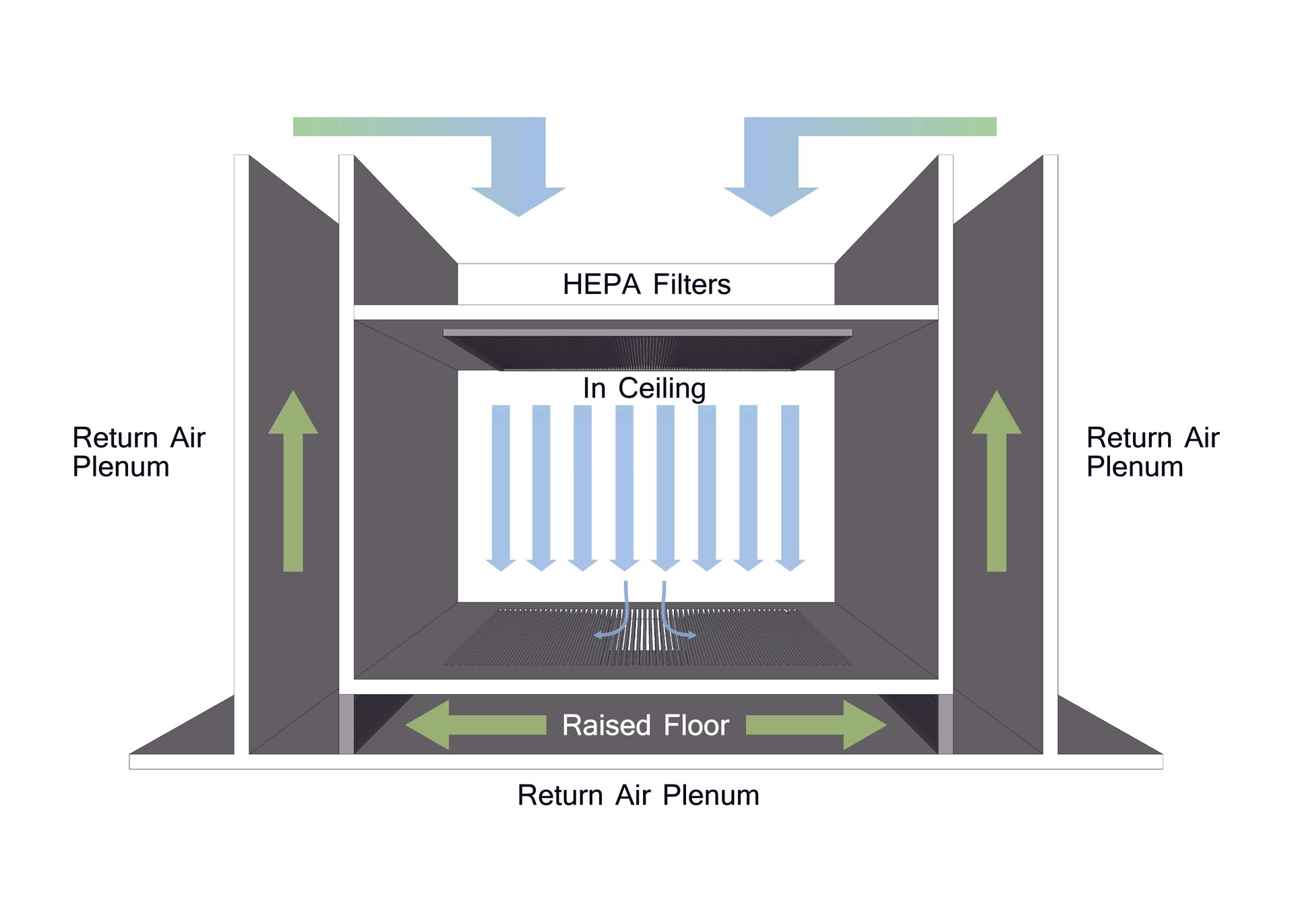
Cleanrooms are among the most energy-intensive environments in modern industry. Maintaining stringent requirements for airborne cleanliness, temperature, humidity, pressure differentials, and air filtration requires continuous operation of sophisticated HVAC systems, often resulting in significantly higher energy consumption than conventional commercial or industrial buildings.
As organizations pursue carbon reduction goals and respond to increasing environmental expectations, sustainable cleanroom design has become an important engineering priority. Rather than compromising contamination control, modern sustainability strategies focus on improving system efficiency, optimizing resource utilization, and reducing lifecycle environmental impacts while maintaining compliance with ISO 14644 and Good Manufacturing Practice (GMP) requirements.
Achieving lower-carbon cleanroom operation requires an integrated approach that considers building design, mechanical systems, operational practices, digital technologies, and long-term facility management.
1.1 Why Cleanrooms Have High Energy Demands
Cleanrooms require tightly controlled environmental conditions that must remain stable around the clock, regardless of external weather conditions or production schedules.
Major contributors to energy consumption include:
- HVAC systems
- HEPA and ULPA filtration
- High air change rates
- Heating and cooling
- Humidity control
- Process cooling
- Lighting
- Production equipment
- Compressed air systems
In many facilities, HVAC systems alone account for more than half of total energy consumption, making them the primary focus of sustainability initiatives.
1.2 Sustainable Design Begins at the Planning Stage
Opportunities to reduce energy use are greatest during the early design phases of a cleanroom project.
Key considerations include:
- Facility orientation
- Building envelope performance
- Process layout
- Equipment placement
- Utility distribution
- Expansion planning
- Mechanical room accessibility
An integrated design process involving architects, mechanical engineers, process engineers, and cleanroom specialists helps optimize both environmental performance and operational efficiency.
Early lifecycle cost analysis can also identify design choices that reduce long-term operating expenses while supporting sustainability objectives.
1.3 Optimizing Air Change Rates
Historically, cleanrooms were often designed with conservative air change rates to provide a safety margin for contamination control.
Current engineering practice increasingly recognizes that air change rates should be based on:
- Cleanroom classification
- Process risk
- Occupancy
- Equipment heat loads
- Particle generation rates
- Recovery performance
Reducing unnecessarily high airflow can significantly lower fan energy consumption without compromising cleanliness, provided the revised design is validated through airflow studies and particle monitoring.
Risk-based optimization is now widely accepted as a practical approach to improving energy efficiency.
1.4 High-Efficiency HVAC Systems
Because HVAC systems represent the largest energy consumer in most cleanrooms, improving their efficiency offers substantial carbon reduction potential.
Effective strategies include:
- High-efficiency fans
- Electronically commutated (EC) motors
- Variable frequency drives (VFDs)
- Optimized duct design
- Low-pressure-drop filters
- Heat recovery systems
- High-performance cooling equipment
Proper commissioning and regular maintenance are equally important to ensure that systems continue operating at their designed efficiency throughout their service life.
1.5 Intelligent Building Management Systems
Modern Building Management Systems (BMS) enable continuous optimization of cleanroom performance through real-time monitoring and automated control.
Integrated BMS platforms can monitor:
- Airflow rates
- Differential pressure
- Temperature
- Relative humidity
- Energy consumption
- Equipment status
- Filter performance
- Alarm conditions
Advanced control algorithms adjust system operation according to actual facility conditions, helping reduce unnecessary energy use while maintaining required environmental parameters.
1.6 Demand-Based Ventilation
Many cleanrooms operate at full airflow continuously, even during periods of reduced occupancy or production.
Demand-based ventilation adjusts airflow according to real-time operating conditions using inputs such as:
- Occupancy sensors
- Particle monitoring
- Production schedules
- Equipment status
- Environmental conditions
When properly validated, demand-controlled ventilation can reduce energy consumption while maintaining contamination control during both active and idle periods.
Any operational adjustments should remain within validated limits and comply with applicable regulatory requirements.
1.7 Energy-Efficient Filtration
HEPA and ULPA filters are essential for maintaining airborne cleanliness, but they also create pressure losses that increase fan energy requirements.
Energy-efficient filtration strategies include:
- Low-resistance filter media
- Proper filter sizing
- Leak-free installation
- Optimized filter replacement schedules
- Continuous pressure monitoring
Replacing filters based on measured pressure drop and validated performance, rather than fixed time intervals alone, can improve both energy efficiency and maintenance planning.
1.8 Sustainable Material Selection
Environmental performance extends beyond operational energy use.
During design and construction, sustainable material selection may include:
- Low-emission construction materials
- Durable wall systems
- Recyclable metal components
- Long-life flooring systems
- Environmentally certified insulation
- Low-VOC sealants and coatings
Material selection should also consider cleanability, chemical resistance, and compatibility with required cleaning and disinfection procedures.
Long-lasting materials often reduce lifecycle environmental impacts by minimizing replacement frequency.
1.9 Water Conservation
Many cleanroom facilities consume significant volumes of water for humidification, process equipment, cleaning, and utility systems.
Water-saving opportunities include:
- Closed-loop cooling systems
- High-efficiency humidifiers
- Water recovery systems
- Optimized clean-in-place (CIP) processes
- Leak detection programs
- Efficient sanitation procedures
Reducing water consumption also lowers the energy associated with water treatment, pumping, and heating.
1.10 Digital Monitoring and Energy Analytics
Digital technologies provide detailed insight into cleanroom energy performance.
Energy management platforms can analyze:
- Equipment efficiency
- HVAC operating hours
- Utility consumption
- Carbon emissions
- Peak electrical demand
- Process energy intensity
Trend analysis enables facility managers to identify inefficiencies, evaluate improvement projects, and verify the effectiveness of sustainability initiatives.
Integration with Manufacturing Execution Systems (MES) and Building Management Systems further enhances operational visibility.
1.11 Commissioning and Continuous Optimization
Even well-designed cleanrooms can consume excessive energy if systems are not properly commissioned or maintained.
Comprehensive commissioning verifies:
- Airflow balance
- Pressure cascades
- Temperature control
- Humidity performance
- Control system operation
- HVAC efficiency
- Alarm functionality
Periodic recommissioning helps identify performance drift caused by equipment aging, control adjustments, or changing production requirements.
Continuous optimization ensures that cleanroom systems remain both compliant and energy efficient throughout their operational life.
1.12 Carbon Reduction Strategies
Organizations seeking to lower greenhouse gas emissions often combine multiple engineering and operational initiatives.
Examples include:
- Electrification of heating systems
- Renewable electricity procurement
- Heat recovery from process equipment
- High-efficiency chillers
- Variable-speed pumping systems
- Optimized production scheduling
- Predictive maintenance
- Energy-aware facility management
While individual measures may provide modest savings, their combined effect can substantially reduce a facility's overall carbon footprint.
1.13 The Future of Sustainable Cleanrooms
Advances in digital technology and engineering are accelerating the transition toward lower-carbon cleanroom operations.
Emerging developments include:
- Artificial intelligence for HVAC optimization
- Digital twins for facility performance simulation
- Internet of Things (IoT) sensor networks
- Predictive energy management
- Smart fan filter units
- Adaptive airflow control
- Integrated carbon reporting dashboards
- Grid-responsive building operation
These technologies enable more precise control of environmental conditions while supporting long-term sustainability objectives without compromising contamination control or regulatory compliance.
Conclusion
Sustainable cleanroom design is no longer solely focused on reducing energy costs—it has become a strategic approach to lowering carbon emissions, improving operational efficiency, and supporting corporate environmental goals.
By optimizing HVAC performance, adopting intelligent building controls, selecting efficient equipment, and applying risk-based engineering principles, organizations can significantly reduce the environmental impact of cleanroom facilities while maintaining compliance with ISO 14644 and GMP requirements.
As cleanroom technology continues to evolve, the integration of digital monitoring, advanced analytics, and high-efficiency building systems will play an increasingly important role in delivering cleanrooms that are both environmentally responsible and capable of supporting the demanding requirements of high-quality manufacturing.
Read more here: About Cleanrooms: The ultimate Guide