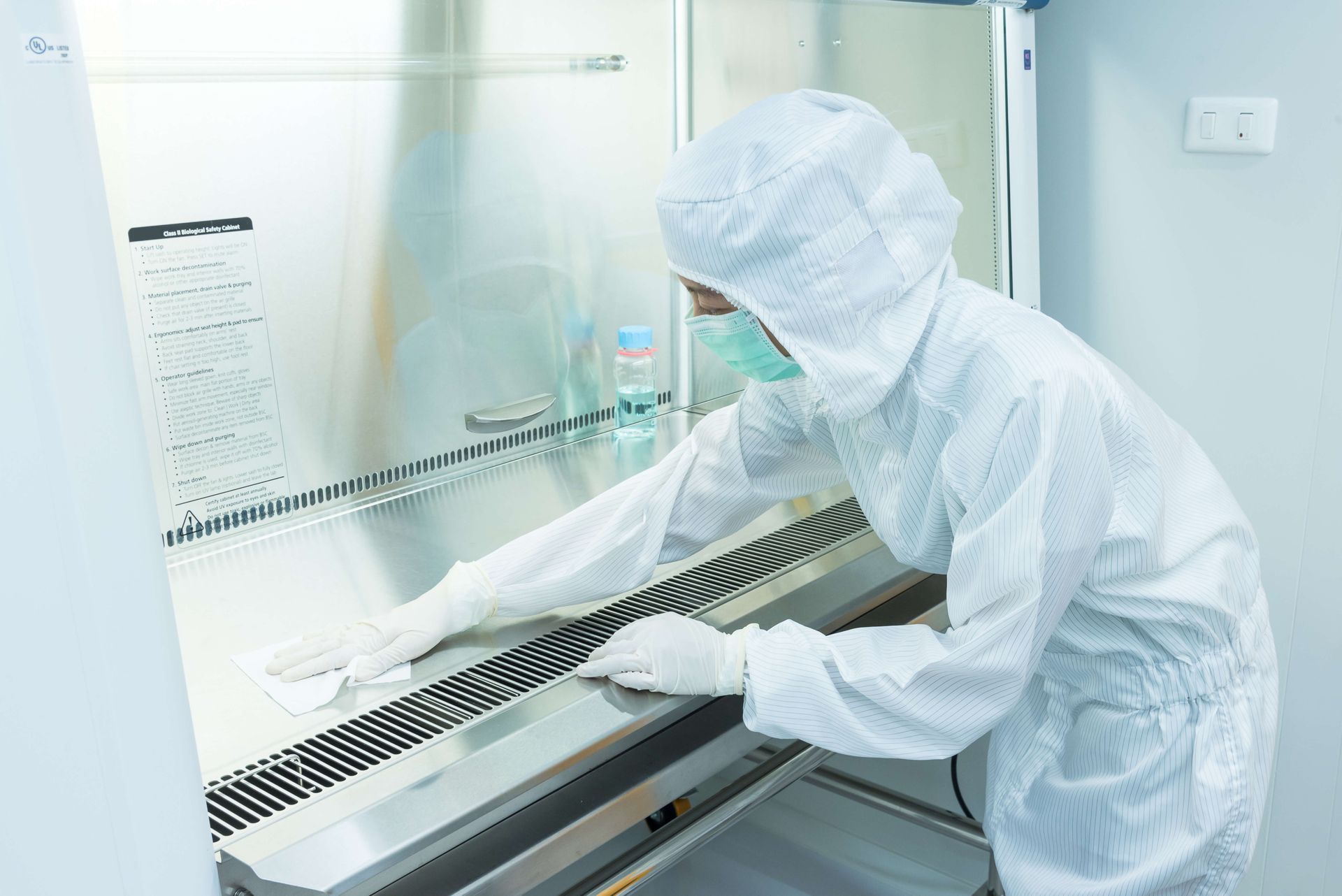
Airborne Molecular Contamination (AMC): Measurement and Mitigation
Airborne Molecular Contamination (AMC): Measurement and Mitigation
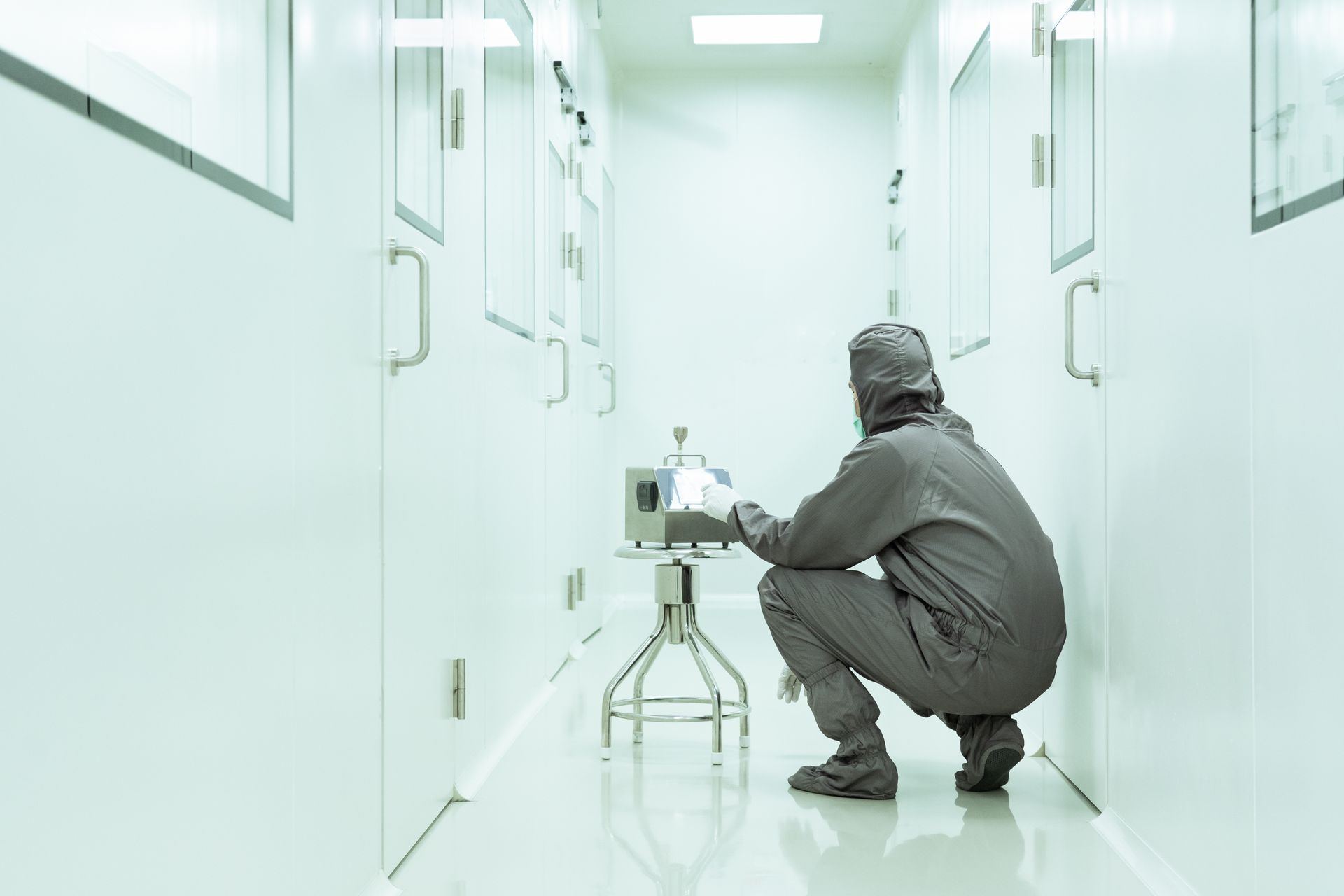
Airborne Molecular Contamination (AMC): Measurement and Mitigation
Introduction
Airborne Molecular Contamination (AMC) has become an increasingly important consideration in cleanroom engineering, particularly in industries where microscopic particles are no longer the primary contamination concern.
While conventional cleanrooms are designed to control airborne particulates through HEPA or ULPA filtration, gaseous contaminants can pass through these filters and interact with sensitive products, materials, and manufacturing processes.
Semiconductor fabrication, pharmaceutical production, biotechnology, precision optics, flat-panel display manufacturing, and advanced research laboratories all face potential risks from airborne molecular contaminants.
Even trace concentrations of acids, bases, volatile organic compounds (VOCs), or condensable molecules can affect product quality, process consistency, equipment reliability, and manufacturing yield.
Effective management of AMC requires an integrated approach that combines facility design, source control, air purification technologies, environmental monitoring, and ongoing risk assessment.
1.1 What Is Airborne Molecular Contamination?
Airborne Molecular Contamination refers to gases or vapor-phase chemical compounds present in cleanroom air at concentrations that may affect products, manufacturing processes, or equipment performance.
Unlike particulate contamination, AMC consists of individual molecules or extremely small chemical compounds that cannot be effectively removed using conventional particulate air filters.
Common categories of airborne molecular contaminants include:
- Acidic gases
- Basic gases
- Volatile Organic Compounds (VOCs)
- Condensable organic compounds
- Dopants
- Oxidizing gases
- Sulfur-containing compounds
- Ammonia
- Ozone
Although concentrations are often measured in parts per billion (ppb) or even parts per trillion (ppt), these contaminants can significantly influence highly sensitive manufacturing processes.
1.2 Why AMC Matters
As manufacturing technologies continue to advance, product dimensions and process tolerances become increasingly sensitive to environmental conditions.
Potential effects of AMC include:
- Corrosion of metallic surfaces
- Optical degradation
- Chemical reactions on product surfaces
- Reduced semiconductor yields
- Sensor drift
- Thin-film defects
- Pharmaceutical product degradation
- Reduced process repeatability
Unlike visible particle contamination, molecular contamination often produces subtle process deviations that may not become apparent until final inspection or product testing.
1.3 Sources of Airborne Molecular Contamination
AMC may originate from both external and internal sources.
External sources include:
- Outdoor industrial emissions
- Vehicle exhaust
- Agricultural activities
- Nearby manufacturing operations
- Atmospheric pollutants
Internal contamination sources commonly include:
- Construction materials
- Paints and coatings
- Adhesives
- Cleaning chemicals
- Disinfectants
- Personnel care products
- Plastic materials
- Packaging materials
- Process chemicals
- Equipment lubricants
Identifying contamination sources is a critical first step in developing an effective mitigation strategy.
1.4 Industries Most Affected by AMC
Although all cleanrooms benefit from good environmental control, certain industries have particularly stringent molecular cleanliness requirements.
Examples include:
- Semiconductor fabrication
- Photolithography
- Microelectronics manufacturing
- Flat-panel display production
- Photonics
- Precision optics
- Aerospace manufacturing
- Biotechnology
- Pharmaceutical manufacturing
- Nanotechnology research
In semiconductor manufacturing, for example, trace acidic or basic gases can interfere with photoresist chemistry, wafer processing, and thin-film deposition.
1.5 Measuring Airborne Molecular Contamination
Unlike airborne particle monitoring, measuring AMC requires specialized analytical techniques capable of detecting extremely low concentrations of chemical species.
Common monitoring methods include:
- Gas analyzers
- Ion chromatography
- Gas chromatography
- Mass spectrometry
- Fourier Transform Infrared (FTIR) spectroscopy
- Photoionization detectors (PIDs)
- Electrochemical sensors
- Sorbent tube sampling with laboratory analysis
The selection of a measurement technique depends on the contaminant of interest, required detection limits, response time, and monitoring objectives.
Continuous monitoring may be appropriate for critical manufacturing environments, while periodic sampling may be sufficient for lower-risk applications.
1.6 ISO Standards for AMC Classification
The ISO 14644 series addresses airborne molecular contamination through ISO 14644-8, which provides a framework for classifying air cleanliness by chemical concentration rather than by particle count.
The standard establishes methods for:
- Identifying target contaminants
- Measuring airborne molecular concentrations
- Classifying molecular cleanliness
- Reporting contamination levels
- Supporting environmental qualification
Unlike particulate classifications defined in ISO 14644-1, AMC classifications are based on the concentration of specific chemical compounds relevant to the manufacturing process.
Organizations should select target contaminants based on documented risk assessments and process sensitivity.
1.7 Source Control as the First Line of Defense
The most effective way to manage AMC is to eliminate or reduce contamination at its source.
Source control measures include:
- Selecting low-emission construction materials
- Using low-VOC sealants and coatings
- Specifying cleanroom-compatible furnishings
- Controlling chemical storage
- Limiting solvent use
- Selecting compatible cleaning agents
- Managing maintenance activities
Reducing contaminant generation minimizes the burden placed on downstream air purification systems.
1.8 Molecular Filtration Technologies
Because HEPA and ULPA filters remove particles rather than gases, dedicated molecular filtration is required for AMC control.
Common technologies include:
- Activated carbon filters
- Chemically impregnated carbon media
- Activated alumina
- Potassium permanganate media
- Zeolite-based adsorbents
- Specialized molecular filter cartridges
Filter media should be selected according to the chemical properties of the target contaminants.
For example, activated carbon effectively adsorbs many organic vapors, while chemically treated media may provide better performance for acidic or basic gases.
Regular performance testing and scheduled media replacement are essential because molecular filters become saturated over time.
1.9 HVAC Design Considerations
HVAC systems play a central role in controlling airborne molecular contamination.
Important design strategies include:
- Adequate outdoor air quality assessment
- Proper air intake location
- Dedicated molecular filtration stages
- Pressure cascade management
- Controlled recirculation
- Airflow optimization
- Humidity control
- Temperature stability
Outdoor air intakes should be located away from loading docks, exhaust stacks, cooling towers, traffic areas, and other potential contamination sources.
Integrating molecular filtration into air handling units provides facility-wide protection against selected contaminants.
1.10 Monitoring and Continuous Verification
AMC control should be verified through an ongoing environmental monitoring program.
Depending on process requirements, monitoring may include:
- Continuous gas monitoring
- Periodic laboratory sampling
- Filter performance assessment
- Outdoor air quality measurements
- Trend analysis
- Alarm management
- HVAC performance verification
Trend analysis is particularly valuable for identifying gradual increases in contaminant concentrations before they affect manufacturing processes.
Monitoring locations should be selected based on contamination risk rather than convenience alone.
1.11 Operational Practices That Reduce AMC
Operational procedures contribute significantly to molecular contamination control.
Good practices include:
- Controlled chemical handling
- Prompt spill response
- Appropriate storage of solvents and reagents
- Preventive maintenance
- Cleanroom-compatible consumables
- Personnel training
- Controlled material introduction
- Equipment cleaning using approved chemicals
Facility procedures should minimize unnecessary introduction of volatile compounds into controlled environments.
1.12 Emerging Technologies
Advances in environmental monitoring and digital building management are improving AMC control capabilities.
Emerging developments include:
- Real-time molecular sensor networks
- Artificial intelligence for contamination prediction
- Smart Building Management System (BMS) integration
- Digital twins for airflow and contaminant modeling
- Predictive filter replacement
- Cloud-based environmental analytics
- Internet of Things (IoT) monitoring platforms
These technologies enable facility managers to respond more rapidly to changing environmental conditions while optimizing filtration performance and maintenance schedules.
1.13 Developing an Airborne Molecular Contamination Control Strategy
An effective AMC management program should form part of the facility's overall contamination control strategy.
The strategy should address:
- Process sensitivity
- Target contaminants
- Source identification
- Material selection
- HVAC design
- Molecular filtration
- Environmental monitoring
- Maintenance procedures
- Change control
- Periodic performance review
Rather than relying solely on end-of-line filtration, successful programs combine engineering controls, operational procedures, and continuous verification to reduce contamination risks throughout the facility lifecycle.
Conclusion
Airborne Molecular Contamination presents unique challenges that cannot be addressed through particulate filtration alone. As manufacturing technologies become increasingly sensitive to trace chemical contaminants, cleanroom designers and facility operators must adopt a broader approach to environmental control that includes source reduction, molecular filtration, specialized monitoring, and risk-based facility management.
By integrating AMC control into cleanroom design, HVAC engineering, material selection, and operational procedures, organizations can protect critical manufacturing processes, improve product quality, and support compliance with ISO 14644 and industry-specific regulatory expectations.
As environmental monitoring technologies continue to evolve, molecular contamination management will become an increasingly important element of high-performance cleanroom engineering.
Read more here: About Cleanrooms: The ultimate Guide