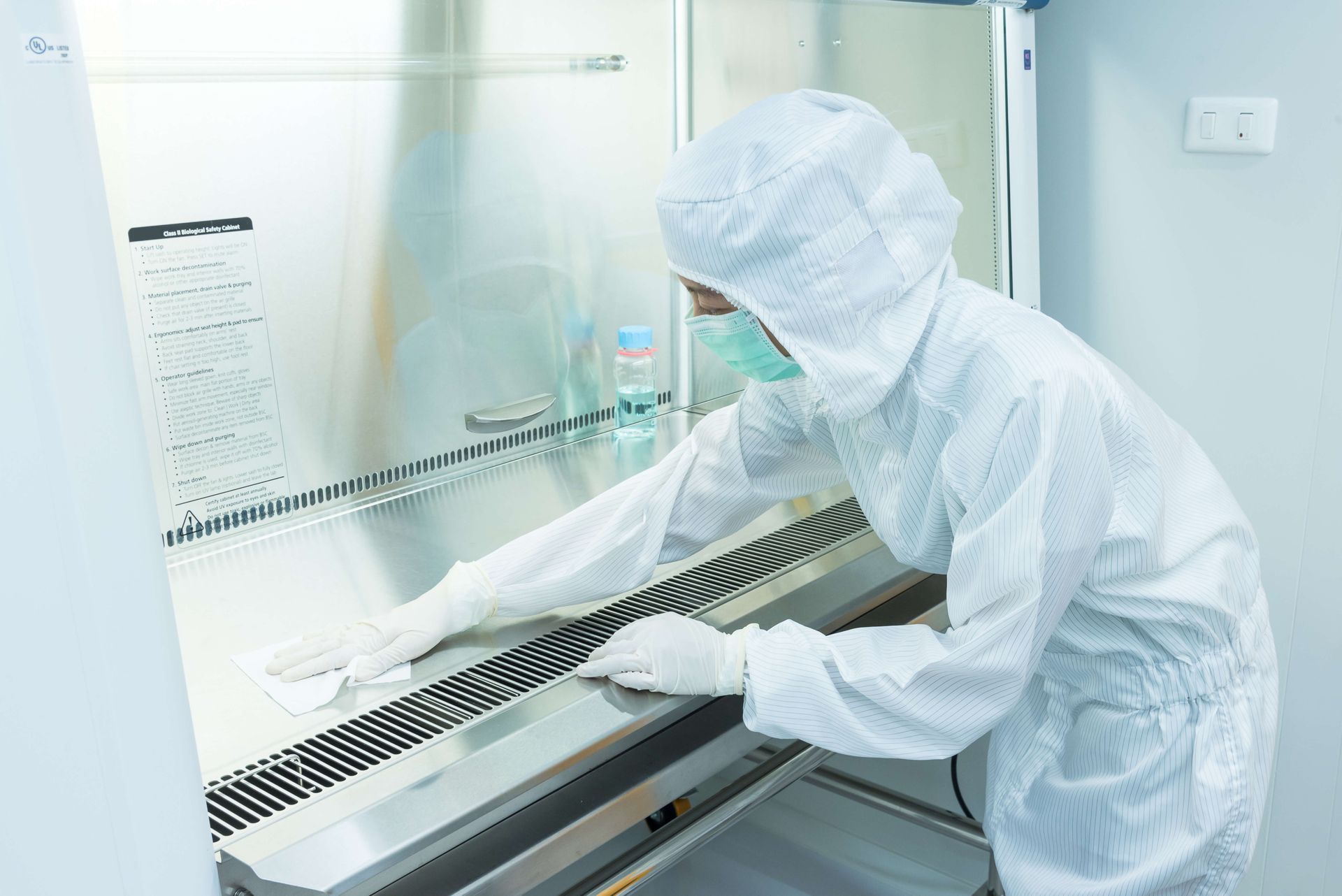
HVAC Redundancy and Failure Mode Mitigation in Critical Cleanrooms
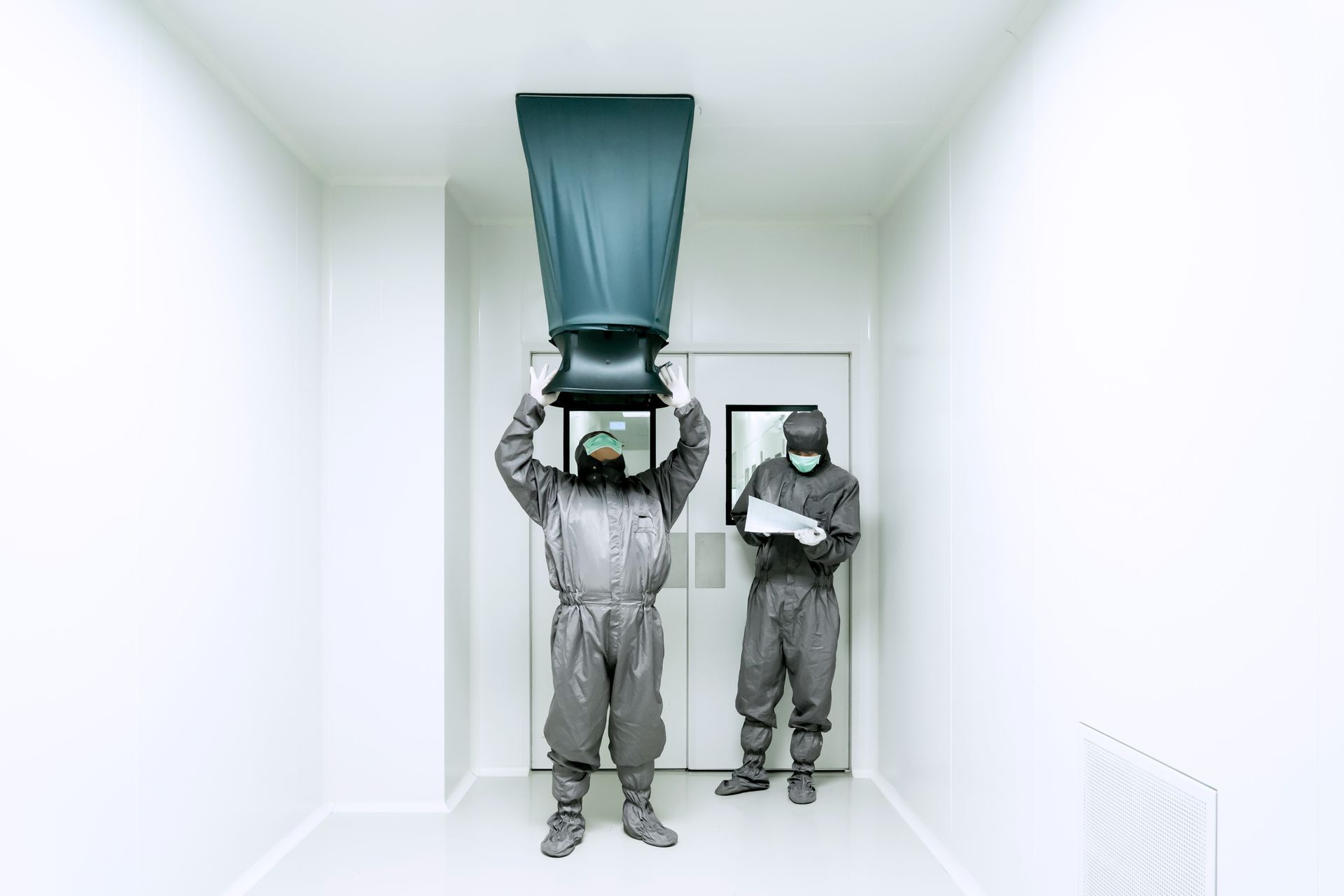
HVAC Redundancy and Failure Mode Mitigation in Critical Cleanrooms
Introduction
In high-criticality cleanrooms — such as sterile manufacturing, ATMP laboratories, parenteral production, and advanced microelectronics — the HVAC system is one of the most risk-sensitive utilities. Beyond supplying conditioned air, it maintains particle cleanliness, pressure cascades, directional airflow, temperature, and humidity — all of which directly influence product quality, regulatory compliance, and operator safety. Any HVAC disruption can lead to loss of classification, contamination events, batch rejection, or containment failures.
To prevent these outcomes, cleanroom HVAC systems must incorporate engineered redundancy and well-defined failure mode mitigation strategies. These ensure that, even during equipment failures or utility interruptions, the facility maintains control or recovers in a predictable, validated manner.
The following sections outline the essential engineering practices for designing, validating, and operating robust redundancy systems in accordance with ISO 14644, EU GMP Annex 1, FDA aseptic processing guidance, and established cleanroom engineering principles.
1. Regulatory and Standards Framework
Effective redundancy strategies must be aligned with the governing standards, including ISO 14644 for cleanliness control and measurement, EU
GMP Annex 1 for sterile environments, and FDA guidance for aseptic processing.
These documents consistently require:
- Environmental conditions to be maintained or rapidly recovered
- Documented contingency plans for HVAC or utilities failure
- Risk-based justification of redundancy and mitigation measures
The design must therefore demonstrate that critical rooms remain protected under normal and abnormal conditions, supported by a documented contamination control strategy (CCS).
2. Defining Criticality and Redundancy Strategy
Redundancy levels must be proportionate to the risk profile of each clean zone:
- High criticality (Grade A/B, ISO 5, containment rooms):
Typically require N+1 or full redundancy for supply, exhaust, and filtration. Parallel AHUs or standby fans are common. - Medium criticality (Grade C/D, ISO 7–8):
Partial redundancy is often sufficient, such as N+1 for key fans but shared AHUs. - Low criticality (ancillary areas):
Focus is primarily on preserving pressure cascades; redundancy may not be necessary.
Risk assessments (e.g., FMEA) should justify the selected approach and be included in the basis of design.
3. Redundancy Concepts in Cleanroom HVAC
3.1 N+1 Redundancy for Fans
A standard cleanroom solution involves two supply or exhaust fans within a single AHU, each sized to accommodate 60–70% of design load. If one fails, the remaining fan increases speed to maintain airflow and pressure. Key considerations include separate power feeds, automatic changeover, and maintaining compliant filter face velocity even in failure mode.
3.2 Redundant Air Handling Units
For highly critical environments, two AHUs may serve the same zone:
- Each capable of 100% of the required airflow (full redundancy), or
- Each capable of ~50–70%, operating in parallel with automatic ramp-up on failure.
Such designs require carefully engineered dampers, reverse-flow protection, and balanced ductwork to preserve stable pressure control and directional airflow.
3.3 Redundant Final Filtration
Terminal HEPA/ULPA filtration can incorporate redundancy through:
- High filter density to tolerate isolated FFU or terminal box outages
- Parallel supply branches that can be isolated without compromising classification
Filter access and replacement strategies should allow maintenance without full room shutdown.
4. Failure Modes and Their Impact
A realistic mitigation plan begins with understanding common failure scenarios.
4.1 Power Failure
Consequences include loss of airflow, pressure, and environmental stability. Mitigation measures include:
- UPS for controls, dampers, monitoring
- Emergency generators for critical fans and AHUs
- Fail-safe damper positions
- Defined black-start sequences
4.2 Fan Failure
Loss of airflow can compromise classification or containment. Solutions include:
- N+1 fans with automatic switchover
- Condition-based maintenance using vibration and electrical monitoring
- Redundant exhaust fans for containment rooms
4.3 Filter Blockage or Failure
Progressive loading reduces airflow and increases differential pressure. Mitigation includes continuous DP monitoring, predictive replacement schedules, and the ability to isolate filter banks for maintenance.
4.4 Control System Failure
Loss of HVAC control can destabilize temperature, humidity, or pressure. Mitigation requires:
- Redundant controllers on critical loops
- Independent hard-wired safety controls
- Defined fail positions for dampers and valves
5. Pressure Cascade and Containment During Failures
Pressure differential is the primary environmental barrier in many cleanrooms. Even during an HVAC failure, maintaining airflow direction is more important than maintaining comfort conditions.
Design practices include:
- Prioritizing pressure stability in control logic
- Using local room-level pressure controllers
- Ensuring failure scenarios (e.g., 50% airflow loss) do not reverse airflow direction
These strategies prevent cross-contamination and support compliance with contamination control requirements.
6. Zoning, Segmentation, and Isolation
HVAC failures are easier to manage when cleanrooms are segmented:
- Airlocks and buffer zones protect critical areas from failures elsewhere
- Isolation dampers allow selective shutdown of non-critical areas
- Zonal AHUs limit the impact of failures and facilitate maintenance without production disruption
Such architectural and mechanical segmentation reduces dependency on single-point systems.
7. Monitoring, Alarms, and Operational Response
Redundancy is only effective when operators are immediately informed and trained to respond.
Critical monitoring includes:
- Continuous particle, pressure, temperature, and humidity measurement
- Tiered alarms distinguishing warnings, action levels, and critical limits
- SOPs for production stoppage, room isolation, and engineering escalation
Trend analysis is essential for predicting failures before they occur.
8. Maintenance and Testing of Redundant Systems
Redundant equipment must be regularly tested and qualified:
- Scheduled switching of duty/standby fans
- Verification of automatic changeover functions
- Simulation tests to confirm pressure and airflow remain within emergency limits
- Integration of redundancy tests into routine qualification (IQ/OQ/PQ)
This ensures the system behaves as intended during real failures.
9. Documentation, CCS Integration, and Lifecycle Management
Redundancy and failure mode mitigation must be documented throughout the facility lifecycle:
- The Contamination Control Strategy should describe redundancy schemes, critical failure modes, and acceptable emergency conditions
- Qualification documentation must include redundancy test protocols and acceptance criteria
- Change control processes must assess how modifications affect redundancy or risk levels
Continuous documentation ensures long-term compliance and operational robustness.
Conclusion
HVAC redundancy and failure mode mitigation in critical cleanrooms require far more than spare parts or backup equipment. They involve a comprehensive design philosophy integrating risk-based redundancy, engineered airflow control, robust zoning, reliable power and automation systems, real-time monitoring, and lifecycle qualification.
When applied correctly, these strategies ensure that even significant HVAC disruptions do not compromise cleanroom protection, regulatory compliance, or product integrity — fulfilling the core expectations of ISO 14644 and GMP-regulated manufacturing environments.
Read more here: About Cleanrooms: The ultimate Guide