
Implementing Real-Time Viable Particle Monitoring Technologies
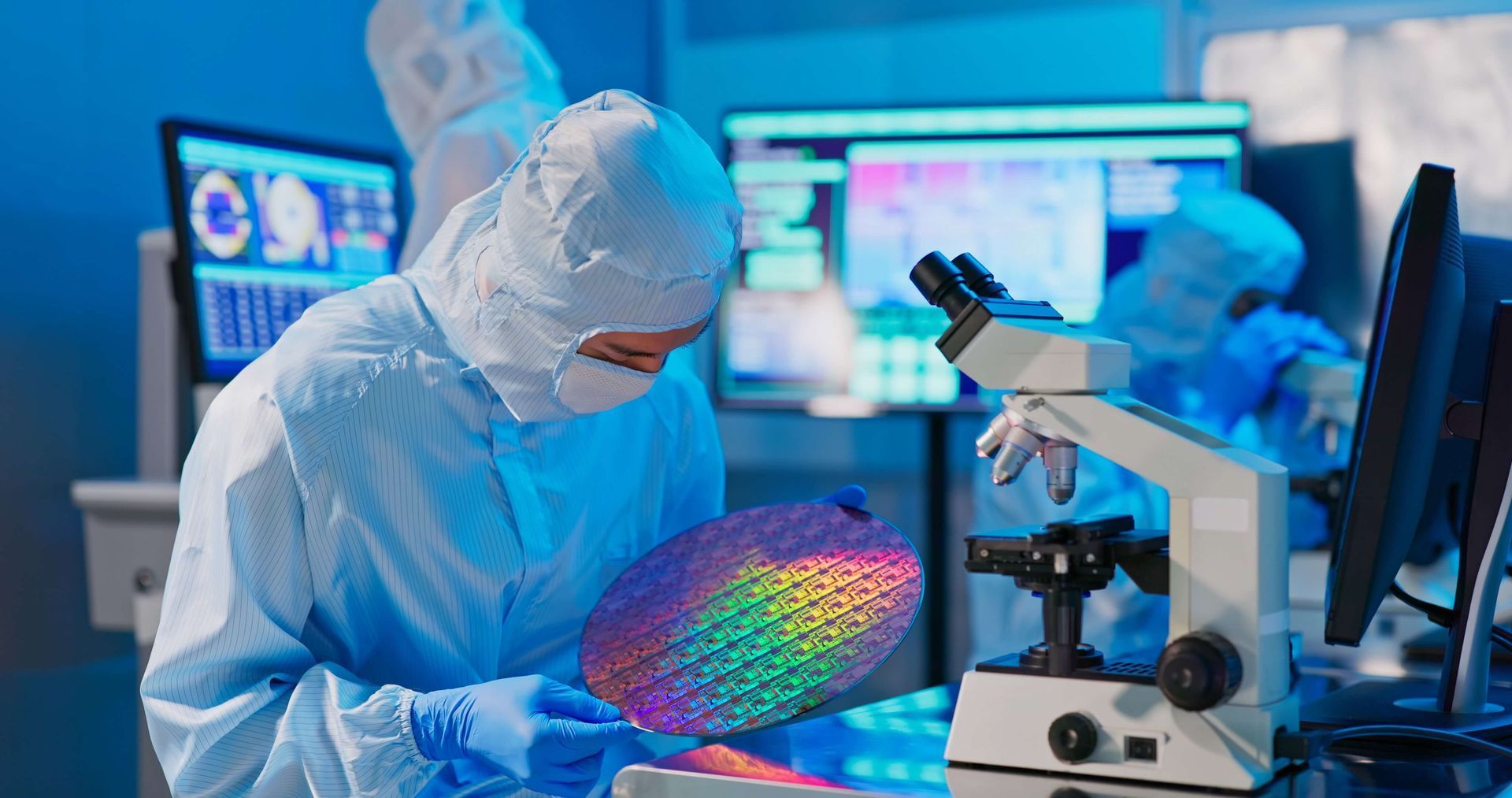
Implementing Real-Time Viable Particle Monitoring Technologies
1. Introduction
Real-time viable particle monitoring technologies are moving from “interesting innovation” to serious design option in modern aseptic facilities. EU GMP Annex 1’s increased focus on continuous monitoring, rapid detection, and robust trending has triggered renewed interest in systems capable of providing near real-time indication of microbiological contamination, rather than waiting days for incubation results.
This article outlines practical, engineering-focused approaches to implementing real-time viable monitoring in ISO-classified areas, with emphasis on technology limitations, integration into existing environmental monitoring (EM) programs, and alignment with contamination control strategies (CCS).
2. Understanding Real-Time Viable Monitoring Technologies
Unlike conventional EM (active air sampling, settle plates, contact plates), real-time viable systems attempt to distinguish biological from non-biological particles as they pass through an instrument.
Common technology principles include:
- Biofluorescent particle counters (BFPC):
- Particles are illuminated by one or more lasers.
- Optical scattering gives size information; autofluorescence (from NADH, riboflavin, etc.) is used as a surrogate for “viable/biological.”
- Flow-cytometry-based systems:
- Particles are stained with fluorescent dyes and passed single-file through a detection zone.
- More complex, generally used in off-line or at-line applications.
- Integrated hybrid systems:
- Combine non-viable counting with biofluorescence to provide simultaneous total and “viable-like” counts in the same sample stream.
Important: these systems do not provide organism identification and do not fully replace traditional culture-based methods. They provide fast indication of changes in biological load, useful for process control and early warning.
3. Regulatory and CCS Context
EU GMP Annex 1 and ISO 14644-2 do not mandate specific technologies, but they do expect that monitoring strategies are:
- Risk-based and science-driven.
- Capable of detecting unusual events and supporting rapid response.
- Integrated into a Contamination Control Strategy (CCS).
Real-time viable systems can support these expectations by:
- Providing continuous or high-frequency data in Grade A and critical Grade B zones.
- Improving visibility during high-risk operations, set-ups, and interventions.
- Enhancing investigations of EM excursions or media fill failures.
However, regulators expect that any such technology is formally validated, its limitations understood, and its role clearly defined alongside traditional EM—not as a black-box replacement.
4. Defining Objectives: Why Do You Want Real-Time Viable Data?
Before selecting equipment, define clear objectives.
Common drivers include:
- Early warning capability in Grade A/RABS/isolators during filling or aseptic manipulations.
- Enhanced understanding of how interventions and equipment states influence viable load.
- Continuous monitoring of normally difficult-to-sample locations (inside isolators, at critical transfer points).
- Support for process optimization, e.g., comparing different line speeds, set-up sequences, or intervention techniques.
Each objective should map to:
- Specific locations (e.g., filling needle zone, stopper bowl, transfer ports).
- Specific process steps or risk scenarios.
- Defined decisions (what actions will you take when the system alarms?).
Without clear objectives and decision rules, the system will generate large amounts of data but little actionable value.
5. Designing the System and Selecting Locations
Location strategy should combine:
- Risk assessments (CCS, FMEA, HACCP-style reviews).
- Airflow visualization studies (smoke studies) to identify where particles reaching the product are most likely to originate.
- Existing EM data, especially past excursions or persistent “weak spots.”
Practical design rules:
- Prioritize Grade A critical zones: directly above open containers, filling needles, open transfer points, stopper bowls.
- For isolators, consider in-chamber sampling in the main aseptic workspace, not just background.
- For RABS, pay attention to interaction zones (glove ports, open-front zones, component loading points).
- Avoid sampling points too close to HEPA outlets or returns where flow may not be representative of what the product “sees.”
Sampling flow rates, tubing length, and bends must be designed according to manufacturer recommendations to avoid particle losses and false trends.
6. Integration with Existing EM Programs
Real-time viable monitoring should be embedded, not bolted-on, to the facility’s EM concept.
Key integration points:
- Complement, don’t replace, plates:
- Traditional active air and surface sampling remain necessary for identification and trend continuity.
- Real-time systems are typically defined as additional, rapid-indication tools.
- Harmonize locations:
- Wherever practical, align real-time sampling heads with existing EM locations so that data can be correlated.
- Sampling strategy:
- Real-time devices run continuously (or at high duty cycles) in defined windows (e.g., entire fill).
- Culture-based samples are taken at defined points (start, middle, end, interventions), providing confirmatory and ID data.
The updated EM plan should show how data streams interact, what each is used for, and how they jointly satisfy Annex 1 expectations.
7. Qualification and Validation Strategy
Implementing real-time viable monitoring requires a structured qualification approach similar to other GMP-critical systems.
Typical qualification elements:
- DQ (Design Qualification):
- Justification of chosen technology.
- Definition of locations, interfaces, sampling rates, and data handling.
- IQ (Installation Qualification):
- Verification of correct installation, materials of construction, tubing routing, and environmental compatibility.
- Calibration status and certificates for flow, laser power, and sensors.
- OQ (Operational Qualification):
- Functionality tests across operating ranges (flow, counting range, alarm logic).
- Verification of signal stability, repeatability, and response to standard test aerosols.
- Method validation / performance characterization:
- Correlation studies vs. conventional active air sampling under controlled challenge conditions.
- Evaluation of false positive/negative rates (e.g., non-biological fluorescence, under-detection of low emitters).
- Determination of system detection limit and dynamic range.
Documentation should clearly describe how “viable-like” counts are defined, including any thresholds, signal processing, and classification logic used by the system.
8. Establishing Alarm Limits and Response Criteria
Unlike traditional EM, real-time systems can generate hundreds or thousands of data points per batch. Alarm strategy must be carefully designed.
Key steps:
- Baseline studies:
- Operate the system over multiple representative batches under “good” conditions to build a baseline distribution.
- Segment data by operation phase (set-up, steady filling, interventions, shutdown).
- Define alert and action levels:
- Use statistical evaluation (e.g., percentiles) as a starting point.
- Adjust based on risk of the operation and tolerance for false alarms.
- Time-based rules:
- Consider alarms based on sustained elevations over defined intervals, not single spikes, to avoid overreaction to transient non-critical events.
- Link to procedures:
- Define specific actions (e.g., check gown, verify HEPA face velocity, pause line, increase observation, initiate investigation).
- Ensure that alarm responses are practical, otherwise operators will rapidly lose trust in the system.
As experience grows, alarm limits can be refined using accumulated trending data.
9. Data Management, Trending, and Integration with CCS
Real-time viable systems generate large data volumes that must be handled in a compliant, meaningful way.
Considerations:
- Data integrity:
- Audit trails, time synchronization, user access control, secure storage, and backup.
- Alignment with data integrity principles (ALCOA+).
- Visualization and reporting:
- Dashboards that overlay viable-like counts with line states (stops, interventions), HVAC status, pressure, and non-viable particle counts.
- Trend analysis:
- Identification of recurring patterns (e.g., specific interventions always causing spikes).
- Use of trend data in CCS reviews and continuous improvement activities.
- Deviation support:
- Ability to retrieve and review time-synchronized real-time data to support investigations of EM excursions, media fill failures, or sterility test failures.
The CCS should explicitly describe how real-time data are used in risk management and continuous improvement, not just that they exist.
10. Practical Challenges and Limitations
Real-time viable monitoring offers significant potential, but also carries limitations that must be acknowledged.
Common challenges:
- Specificity:
- Biofluorescence is an indirect marker; some non-biological particles fluoresce and some damaged microorganisms may not.
- Quantitative comparability:
- Results may not be directly comparable to “cfu/m³”; they are often reported as “biological particle counts” and must be interpreted accordingly.
- Instrument sensitivity to environment:
- Vibration, temperature swings, and condensation can affect performance.
- Maintenance and contamination:
- Systems can themselves become contaminated; maintenance and cleaning procedures must be defined and validated.
- Regulatory familiarity:
- Inspectors may be cautious if the technology appears to “replace plates.” Clear positioning within the EM program is essential.
Being transparent about these limitations in validation reports and CCS discussions builds confidence and avoids unrealistic expectations.
11. Lifecycle Management and Periodic Review
Once implemented, real-time viable monitoring must be managed over the full lifecycle.
Key lifecycle activities:
- Periodic performance checks:
- Routine system suitability tests (e.g., defined aerosol challenge) at defined intervals.
- Calibration and preventive maintenance:
- As per manufacturer recommendations and internal procedures, with full documentation.
- Periodic data review:
- At least annual review of trends, alarm frequency, false positive/negative patterns, and correlation with traditional EM.
- Change control:
- Any modification in sampling location, software version, classification algorithms, or integration must undergo formal impact assessment and revalidation where needed.
- Continuous improvement:
- Use insights from real-time data to refine interventions, gowning, layout, and airflow conditions.
These activities should be integrated into the site’s quality system and linked to the CCS review cycle.
12. Conclusion
Real-time viable particle monitoring technologies provide powerful new visibility into microbiological risk in critical cleanroom zones. When implemented with clear objectives, robust validation, well-designed alarm strategies, and tight integration into the EM program and CCS, they can significantly enhance contamination control and support Annex 1 expectations for continuous, risk-based monitoring.
However, success depends on engineering discipline and realistic expectations: these systems are best used as enhanced detection and diagnostic tools, not as simple replacements for culture-based monitoring. Facilities that understand and manage both the strengths and limitations of real-time viable monitoring will be well positioned to operate safer, more robust aseptic processes in the years ahead.
Read more here: About Cleanrooms: The ultimate Guide