Technical Requirements for Cleanroom-Compatible Automation Equipment
Cleanroom Automation Equipment: Design, Materials and Contamination Control Requirements
Technical Requirements for Cleanroom-Compatible Automation Equipment
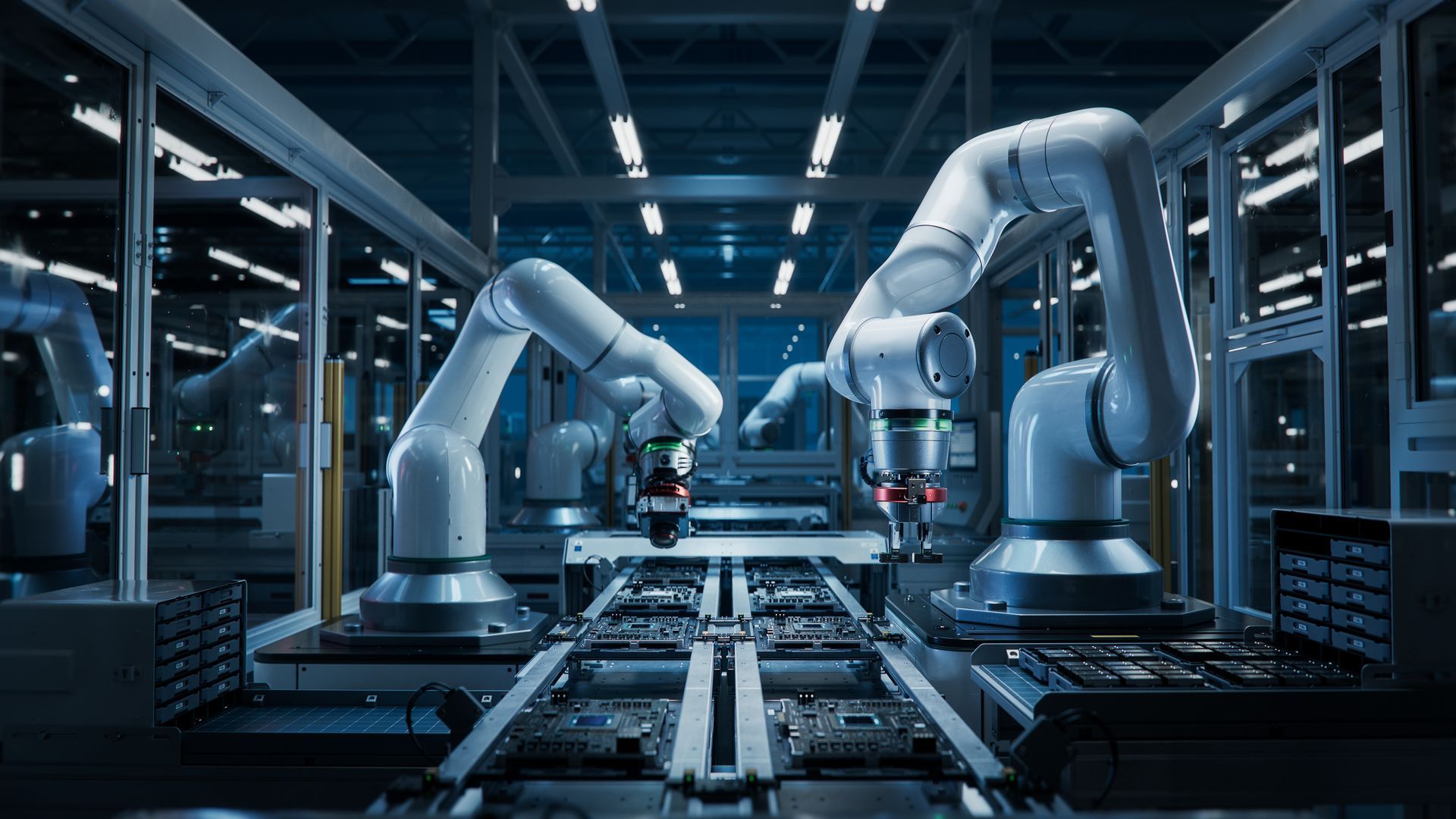
Automation is increasingly integrated into cleanroom manufacturing, from robotic handling and automated inspection to conveyors, filling systems, assembly equipment and material-transfer systems. However, industrial automation equipment cannot simply be installed in a controlled environment without considering its effect on contamination control.
A cleanroom-compatible automation system must perform its production function without compromising the required airborne cleanliness, airflow pattern, surface cleanliness or, where applicable, microbiological control strategy. ISO 14644-1 defines cleanroom classification in terms of airborne particle concentration, while ISO 14644-14 provides a methodology specifically for assessing equipment suitability with respect to airborne particle cleanliness.
For pharmaceutical sterile manufacturing, equipment design must additionally support the contamination-control principles established by EU GMP Annex 1.
1.1 Particle Generation Must Be Minimized
One of the primary engineering considerations is particle generation from moving equipment.
Automation systems contain numerous potential particle sources, including bearings, linear guides, gears, belts, cable carriers, pneumatic components and robotic joints. Friction between moving surfaces can release particles directly into the cleanroom.
Equipment selection should therefore consider particle generation under actual operating conditions rather than relying solely on the cleanliness of the machine when stationary.
ISO 14644-14:2026 provides a methodology for assessing the suitability of equipment in relation to airborne particle concentration and links that assessment to the cleanliness classifications established by ISO 14644-1. The standard covers equipment including machinery, measuring equipment, process equipment, components and tools.
Low-particle design typically involves enclosed drive systems, appropriate bearing technologies, low-wear materials and lubricants suitable for the intended controlled environment.
Where practical, motors, gearboxes and other significant particle-generating components can also be located outside the critical clean zone.
1.2 Equipment Must Support Cleanroom Airflow
Cleanroom automation equipment becomes part of the aerodynamic environment of the room.
Large machine frames, robots, control cabinets and process modules can obstruct supply airflow or create recirculation zones. These effects are particularly important around exposed products and critical processing locations.
Equipment layout should therefore be coordinated with the cleanroom airflow concept during design rather than evaluated only after installation.
Machine geometry should minimize unnecessary horizontal surfaces and large obstructions beneath clean-air supply systems. Where unidirectional airflow is required, equipment should permit clean air to reach critical locations and contaminants to move away from the process.
For sterile manufacturing, EU GMP Annex 1 specifically applies contamination-control principles to the design of facilities, equipment, systems and procedures and identifies technologies such as RABS, isolators and robotic systems as tools that may increase product protection when appropriately applied.
Airflow visualization studies are particularly useful for verifying interactions between automation equipment, operators and critical processing zones.
1.3 Machine design
A cleanroom-compatible machine should be designed as a cleanable structure, not simply manufactured from stainless steel.
Exposed surfaces should be smooth, accessible and resistant to the cleaning agents used within the facility. Crevices, exposed threads, overlapping plates, deep recesses and inaccessible cavities should be minimized because they can retain contamination and make reproducible cleaning difficult.
Frames frequently use stainless steel, while selected engineered polymers, coated metals and elastomers may also be appropriate depending on the process.
Material selection should consider:
- particle shedding and abrasion resistance;
- chemical compatibility with cleaning and disinfection agents;
- corrosion resistance;
- surface finish and cleanability;
- temperature and humidity exposure;
- process-specific contamination risks.
It is important to distinguish equipment particle-emission qualification from hygienic design. ISO 14644-14 specifically states that its scope does not cover equipment cleanability, material-selection requirements or suitability of decontamination agents. Those characteristics must therefore be addressed separately in the equipment specification and contamination-control strategy.
1.4 Lubrication Requires Careful Control
Lubricants represent another potential contamination source.
Conventional industrial greases and oils may migrate from bearings, gearboxes or linear motion systems. Equipment intended for critical environments should therefore minimize exposed lubrication points and prevent lubricants from reaching cleanroom surfaces or products.
'
Sealed bearings and enclosed transmissions are generally preferable where technically feasible. Lubricant selection should consider volatility, migration, process compatibility and the specific regulatory requirements applicable to the manufacturing operation.
The correct lubricant is consequently determined by both machine requirements and contamination risk; there is no single lubricant specification appropriate for every cleanroom application.
1.5 Pneumatic Systems Require Exhaust Management
Compressed-air components are widely used in automation, but pneumatic exhaust can disturb local airflow and release contaminants.
Valve manifolds, cylinders and vacuum generators should therefore be evaluated according to their location and function. Exhaust air may need to be filtered or routed away from critical areas.
Compressed gases that contact products or product-contact surfaces require additional controls appropriate to the process.
The same principle applies to vacuum systems. Pump exhaust and other contamination sources should not discharge uncontrolled into critical cleanroom locations.
1.6 Cables and Electrical Components Need Cleanroom-Oriented Design
Electrical installation details can significantly influence cleanability.
Standard corrugated cable conduits, exposed cable bundles and complicated cable trays can create difficult-to-clean surfaces. Cleanroom equipment should use cable-routing systems that reduce particle traps while maintaining the required electrical and mechanical protection.
Control cabinets should preferably be positioned outside higher-classification zones where the process permits. Where cabinets must remain inside the cleanroom, their external geometry should facilitate cleaning and minimize horizontal ledges and unnecessary penetrations.
Cooling arrangements also require attention. Fans can generate particles and influence local airflow, so cabinet ventilation and heat rejection must be coordinated with the cleanroom HVAC strategy.
1.7 Maintenance Must Be Designed Into the Equipment
Maintenance can generate significantly more contamination than normal machine operation.
Replacing bearings, opening drive systems, lubricating mechanisms or servicing motors can release particles into the surrounding environment. Cleanroom equipment should therefore be designed so routine maintenance can be performed with minimal impact on controlled areas.
Where possible, serviceable components should be accessible from a technical area outside the cleanroom. Maintenance panels should not require unnecessary disassembly of clean surfaces.
For GMP facilities, maintenance activities should also be incorporated into documented procedures, change control and contamination-control practices. EU GMP Annex 1 emphasizes that facilities, equipment and processes should be appropriately designed, qualified or validated and, where applicable, subjected to ongoing verification.
1.8 Automation Must Be Considered During Cleanroom Qualification
Installing automation equipment changes the cleanroom configuration.
Equipment influences airflow, particle generation, heat loads, cleaning access and operating conditions. Consequently, qualification should evaluate the room in representative states and configurations.
ISO 14644-1 establishes airborne particle classification requirements for cleanrooms and clean zones. For equipment specifically, the current ISO 14644-14:2026 provides the methodology for assessing suitability based on airborne particle concentration; it replaced the 2016 edition in February 2026.
Depending on the facility and risk assessment, qualification activities may include airborne particle measurements, airflow-volume measurements, pressure-differential verification, HEPA-filter integrity testing, airflow visualization and recovery testing.
In GMP applications, qualification requirements should additionally be integrated into the facility's overall qualification and validation strategy.
1.9 Cleanroom Compatibility Is Application-Specific
There is no universal specification that makes a robot, conveyor or automated machine suitable for every cleanroom.
ISO 14644-14 itself defines cleanroom suitability in relation to maintaining the critical control attributes of a clean zone when equipment is used as intended, with the standard's particular assessment focused on airborne particle concentration.
This means equipment suitability should be specified against the intended operating environment. A useful user requirement specification should identify the required ISO classification or GMP grade, operational state, product exposure, permitted materials, cleaning and disinfection regime, particle-generation expectations, airflow constraints and maintenance strategy.
Environmental requirements such as temperature, humidity, electrostatic control and chemical compatibility should also be defined where relevant.
1.10 Cleanroom Automation Requires Integrated Engineering
Successful cleanroom automation depends on coordination between mechanical engineering, automation engineering, HVAC design and contamination-control requirements.
A technically advanced robot does not automatically constitute a cleanroom-compatible system. The complete installation—including the robot, tooling, cables, drives, guarding, controls, utilities and maintenance interfaces—must be evaluated as part of the controlled environment.
This system-level approach is especially important because ISO 14644-14 addresses airborne particle suitability but explicitly excludes several other characteristics, including biocontamination, cleanability, decontamination-agent suitability and material-selection requirements. Those aspects must be addressed through complementary engineering requirements and, in regulated sterile manufacturing, the facility's contamination control strategy.
When automation is designed together with the cleanroom rather than introduced as conventional industrial equipment after the fact, contamination risks can be addressed systematically through equipment geometry, material selection, airflow integration, utility design, cleaning access, maintenance planning and qualification.
The result is automation that supports production performance while preserving the controlled conditions on which cleanroom processes depend.
Conclusion
Cleanroom-compatible automation requires more than selecting equipment marketed for use in controlled environments. Compatibility depends on how the complete automation system interacts with airflow, particle control, cleaning procedures, materials, utilities, maintenance activities and the surrounding cleanroom.
Particle-generating mechanisms should be minimized or isolated, surfaces should be accessible and cleanable, pneumatic exhaust and lubrication must be controlled, and equipment geometry should support rather than disrupt the intended airflow pattern. Electrical installations, cable routing and maintenance access should also be considered from the beginning of the equipment design.
ISO 14644 provides the framework for airborne cleanliness classification and assessment of equipment suitability, while GMP requirements introduce additional contamination-control considerations for pharmaceutical applications. Neither replaces a project-specific engineering assessment.
The most reliable approach is therefore to define cleanroom requirements during the automation specification and design phases. Integrating contamination control into equipment design, layout, installation and qualification reduces the risk of discovering incompatibilities after commissioning and helps ensure that automation can operate without compromising the required cleanroom conditions.
Ultimately, cleanroom compatibility is a property of the complete installed system—not simply a specification attached to an individual robot, conveyor or machine.
Read more here: About Cleanrooms: The ultimate Guide