The Role of HEPA Filters in Cleanroom Air Quality
Introduction
Cleanrooms are critical environments used in industries such as pharmaceuticals, biotech, and semiconductors, where the presence of environmental pollutants like dust, airborne microbes, and aerosol particles must be controlled. High-Efficiency Particulate Air (HEPA) filters play a pivotal role in maintaining the stringent air quality standards required in these environments. This article delves into the mechanics of HEPA filters, their effectiveness, implementation, and maintenance within cleanroom settings.
Understanding HEPA Filters
Definition and Standards
HEPA filters are defined by their ability to trap 99.97% of particles that are 0.3 microns in diameter. This size represents the Most Penetrating Particle Size (MPPS), which is the most difficult size to filter out of the air. The efficiency of HEPA filters at other particle sizes, both larger and smaller, typically exceeds this standard.
Construction and Materials
HEPA filters are composed of a dense mat of randomly arranged fibers, usually made from fiberglass. The key factors affecting their function include fiber diameter, filter thickness, and the face velocity of the air passing through the filter. The mechanism of trapping particles involves a combination of the following:
- Interception: Particles following a stream of air come within one radius of a fiber and adhere to it.
- Impaction: Larger particles are unable to avoid fibers because of inertia and embed themselves in the fibers.
- Diffusion: Ultrafine particles, especially those smaller than 0.1 microns, collide with gas molecules and are pushed towards the fibers.
Role in Cleanrooms
Air Quality Standards
Cleanrooms are classified according to the number and size of particles permissible per volume of air, typically measured in cubic meters or feet. For instance, an ISO 5 cleanroom allows 3,520 particles of 0.5 microns per cubic meter, whereas an ISO 8 cleanroom permits 832,000 particles of the same size per cubic meter. HEPA filters are instrumental in achieving these standards, from the more lenient ISO 8 to the more stringent ISO 1.
Placement and Configuration
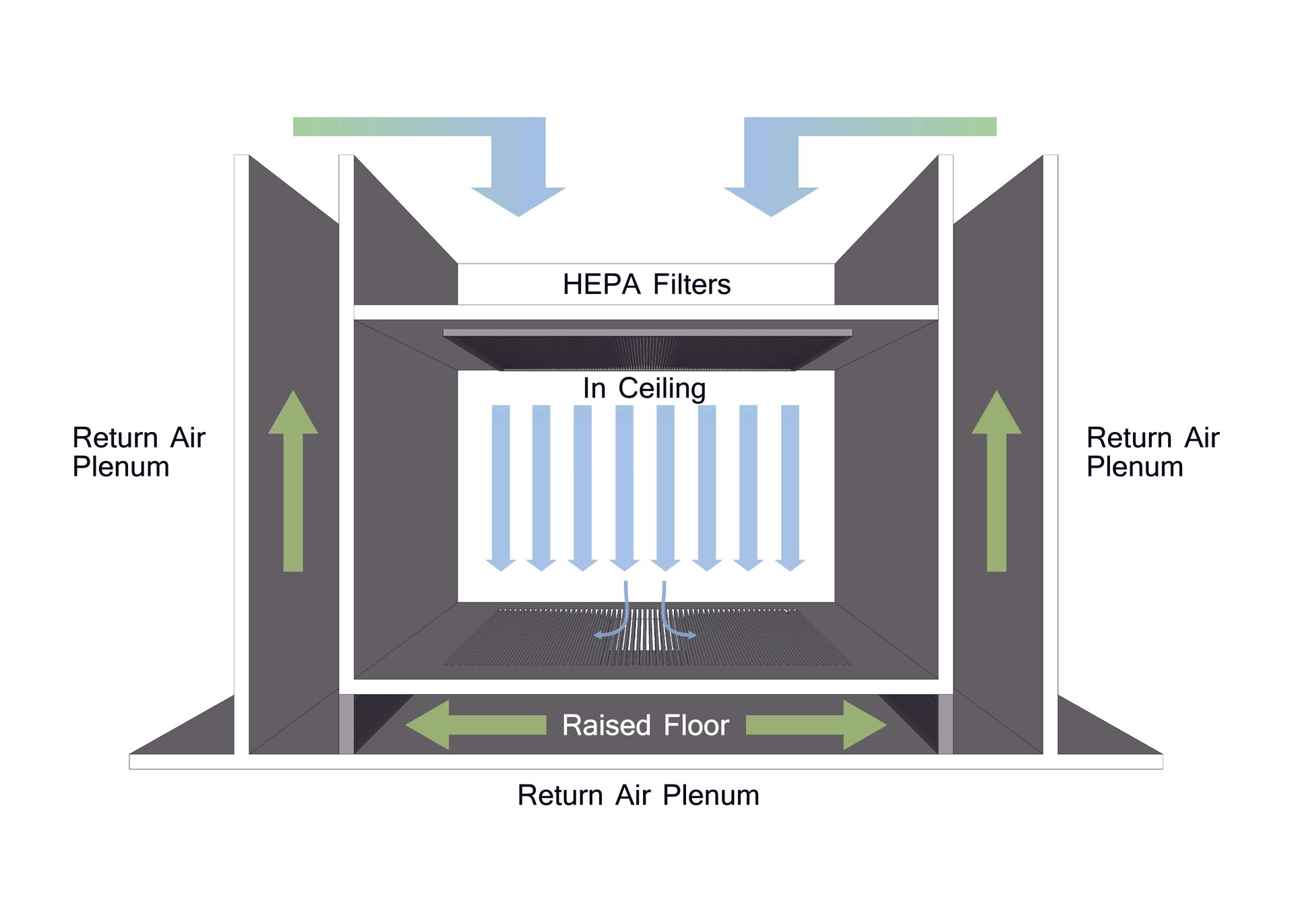
HEPA filters are usually installed where the cleanroom's air supply enters the room or within recirculating air systems. In more critical applications, HEPA filters can be supplemented with Ultra-Low Particulate Air (ULPA) filters, which capture 99.999% of particles down to 0.12 microns.
Implementation and Challenges
Installation
Correct installation of HEPA filters is critical to their effectiveness. This includes proper sealing in the filter frame and accurate placement to avoid bypass air, which can carry contaminants around the filter instead of through it.
Energy Considerations
HEPA filters cause significant resistance to airflow. Systems must be designed to handle these pressures without compromising the integrity of the filter and while maintaining efficient energy use. Advanced HVAC systems often incorporate variable speed fans to adjust the air pressure as filters accumulate particles and resistance increases.
Maintenance and Testing
Regular Testing
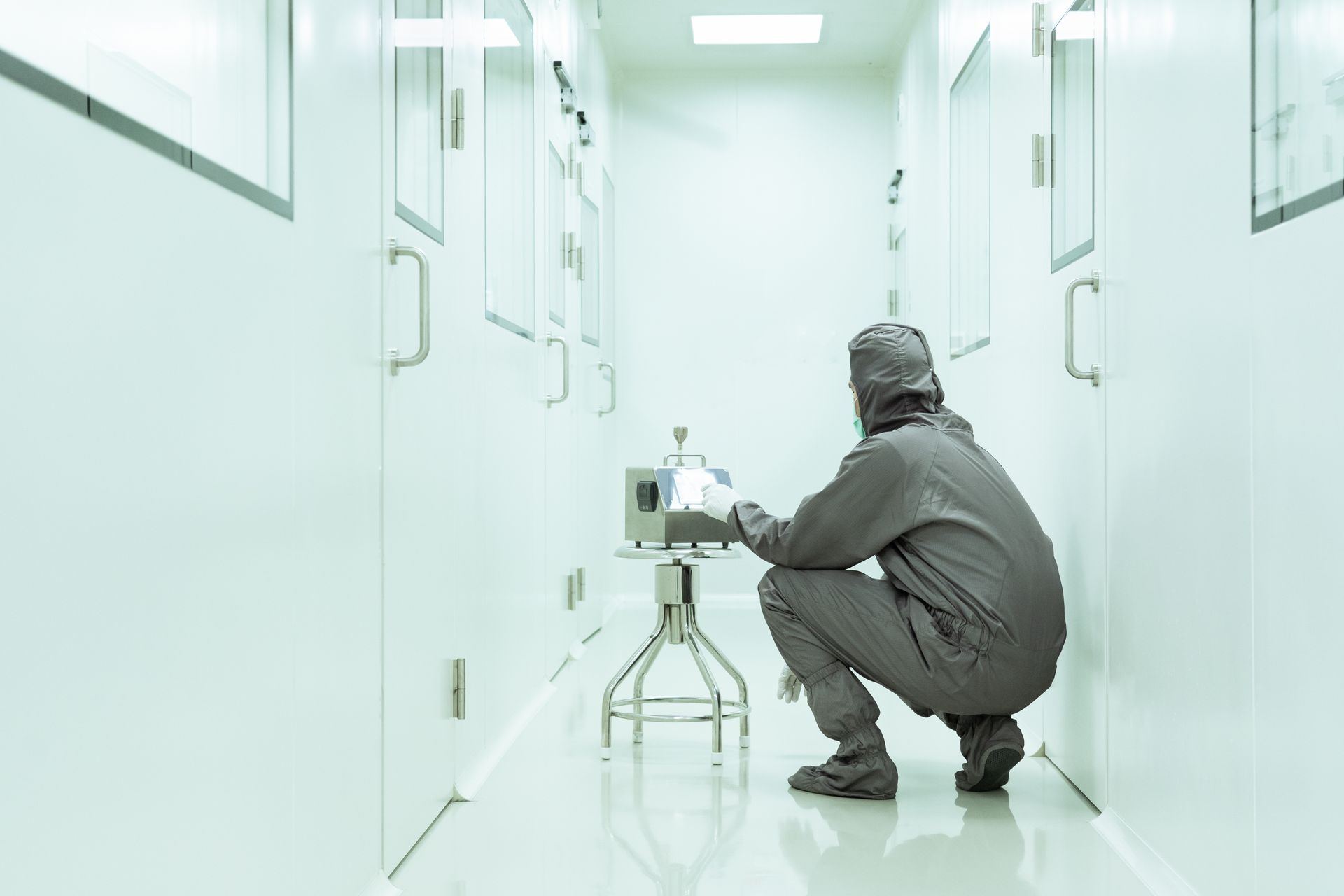
Testing and validation are crucial to ensure that HEPA filters continue to perform adequately. The most common testing method is the DOP (Dispersed Oil Particulate) test, where a fine mist of dioctyl phthalate is introduced upstream of the filter and measurements are taken to ensure no particles of this oil mist penetrate the filter.
Replacement and Disposal
Eventually, HEPA filters will need to be replaced as they become clogged with particles. The replacement schedule depends on the cleanroom's specific operating conditions and the results of regular testing. Disposal of used HEPA filters must also be handled carefully, often requiring incineration to destroy trapped biohazards effectively.
Conclusion
HEPA filters are a cornerstone of cleanroom technology, crucial for maintaining the low levels of particulate contamination required in critical manufacturing and research environments. Their implementation and maintenance require precise engineering and vigilant oversight, but the payoff is immense in industries where even microscopic contaminants can invalidate results or products. The continual evolution of HEPA technology promises even greater efficiencies and innovations in particle control, reflecting the ongoing demand for cleaner and more controlled environments across various high-tech industries.
Read more: All About Cleanrooms - The ultimate Guide