Cleanroom – your comprehensive guide from 14644 Cleanroom

Cleanroom – your comprehensive guide
At 14644 Cleanroom, we understand that a cleanroom is more than just a controlled environment; it's the foundation for critical operations across diverse industries. From pharmaceuticals and biotechnology to semiconductor manufacturing and aerospace, maintaining an ultra-clean, contaminant-free space is paramount for product integrity, research accuracy, and patient safety. Since 1992, we have been at the forefront of cleanroom consulting, having contributed to over 100 cleanroom projects, guided by the expertise of our CEO, Kjeld Lund. We are here to ensure your cleanroom meets the most stringent international standards, mitigating risks and optimizing performance.
This page will walk you through what a cleanroom entails, why it’s critical, and how 14644 Cleanroom provides impartial, expert guidance through every stage, from design and construction to operation and certification. Our goal is to help you minimize liability and achieve a compliant, efficient, and safe controlled environment tailored precisely to your specific needs.
What is a cleanroom?
A cleanroom is a specially engineered and controlled environment designed to minimize the presence of airborne particles, such as dust, airborne microbes, aerosol particles, and chemical vapors. These controlled spaces are critical where even the smallest contaminants can compromise products, processes, or research. The level of control in a cleanroom is far beyond what can be achieved in standard rooms, involving specialized air filtration systems, controlled temperature and humidity, and strict operational protocols.
The primary function of a cleanroom is to regulate particulate contamination to a specified level, ensuring the integrity of sensitive processes. This control extends to factors like temperature, pressure, and humidity, all of which are meticulously managed to create an ideal operating environment. Without a properly designed and operated cleanroom, many high-tech manufacturing processes, pharmaceutical productions, and sensitive scientific experiments would simply not be possible.
Why is a cleanroom essential for your industry?
For many industries, the integrity of products and processes hinges on a meticulously controlled environment. A cleanroom isn't just a desirable feature; it's a critical necessity. Consider the pharmaceutical industry, where even a microscopic particle can render a batch of medication unsafe or ineffective. In semiconductor manufacturing, minuscule dust can destroy delicate microchips. These are just a few examples of why maintaining a controlled space is non-negotiable.
The benefits of a well-implemented cleanroom extend beyond merely avoiding contamination. They include:
- Ensuring product quality and reliability: Protecting sensitive materials from environmental contaminants.
- Meeting regulatory compliance: Adhering to strict industry standards like ISO 14644, EU GMP, and USP guidelines.
- Enhancing process efficiency: Reducing contamination-related defects and rework.
- Protecting personnel: In certain applications, cleanrooms also protect staff from hazardous materials.
At 14644 Cleanroom, we help you understand these crucial requirements and implement solutions that not only meet but exceed expectations, thereby helping to limit your liability.
Our expertise in cleanroom design and construction
Designing and constructing a cleanroom is a complex undertaking that requires specialized knowledge and meticulous attention to detail. Since 1992, 14644 Cleanroom has gained extensive experience in guiding clients through every phase of this process. We’ve been involved in over 100 cleanroom projects, leveraging our deep understanding of international standards and best practices.
Cleanroom design considerations
A successful cleanroom begins with an optimized design. Our approach involves a thorough understanding of your specific needs, process flows, and the required contamination control levels. We assist in creating comprehensive User Requirement Specifications (URS), which are foundational documents that define all aspects of your functional needs for the cleanroom. This ensures that the design is perfectly aligned with your operational goals and regulatory obligations.
Key design elements we focus on include:
- Airflow dynamics and filtration (HEPA/ULPA filters)
- Pressure differentials to prevent contaminant ingress
- Material selection for surfaces, walls, floors, and ceilings
- Entry and exit protocols and gowning rooms
- Integration of specialized equipment
We provide cleanroom URS development to ensure that every detail is captured from the outset, paving the way for a compliant and efficient facility.
Cleanroom construction oversight
During the construction phase, our role is to provide impartial oversight and expert advice. We assist with the validation of supplier quotations, ensuring that all proposed solutions meet the highest standards and align with your URS. Our project management expertise ensures that construction progresses smoothly, on schedule, and within budget, with adherence to all cleanroom-specific requirements.
We work collaboratively with architects, contractors, and engineering teams, bringing our specialized knowledge to bridge any gaps and ensure that the final build is robust, compliant, and ready for operation. This proactive involvement minimizes costly rework and ensures the long-term success of your cleanroom.
Operating and maintaining your cleanroom
Once your cleanroom is built, successful operation and maintenance are vital for sustaining its performance and compliance. At 14644 Cleanroom, we offer comprehensive consulting services to support you throughout the operational lifecycle of your facility.
Cleanroom validation and certification
Validation and certification are critical steps to formally confirm that your cleanroom meets the required standards. We conduct thorough cleanroom validation and cleanroom certification processes according to international standards such as ISO 14644 (ISO 1-9), FS209E, EU GMP ABCD, and USP 797, 800, 825.
This includes testing for:
- Airborne particulate cleanliness classes
- Airflow patterns and velocity
- Differential pressure
- Temperature and humidity control
- Recovery rates
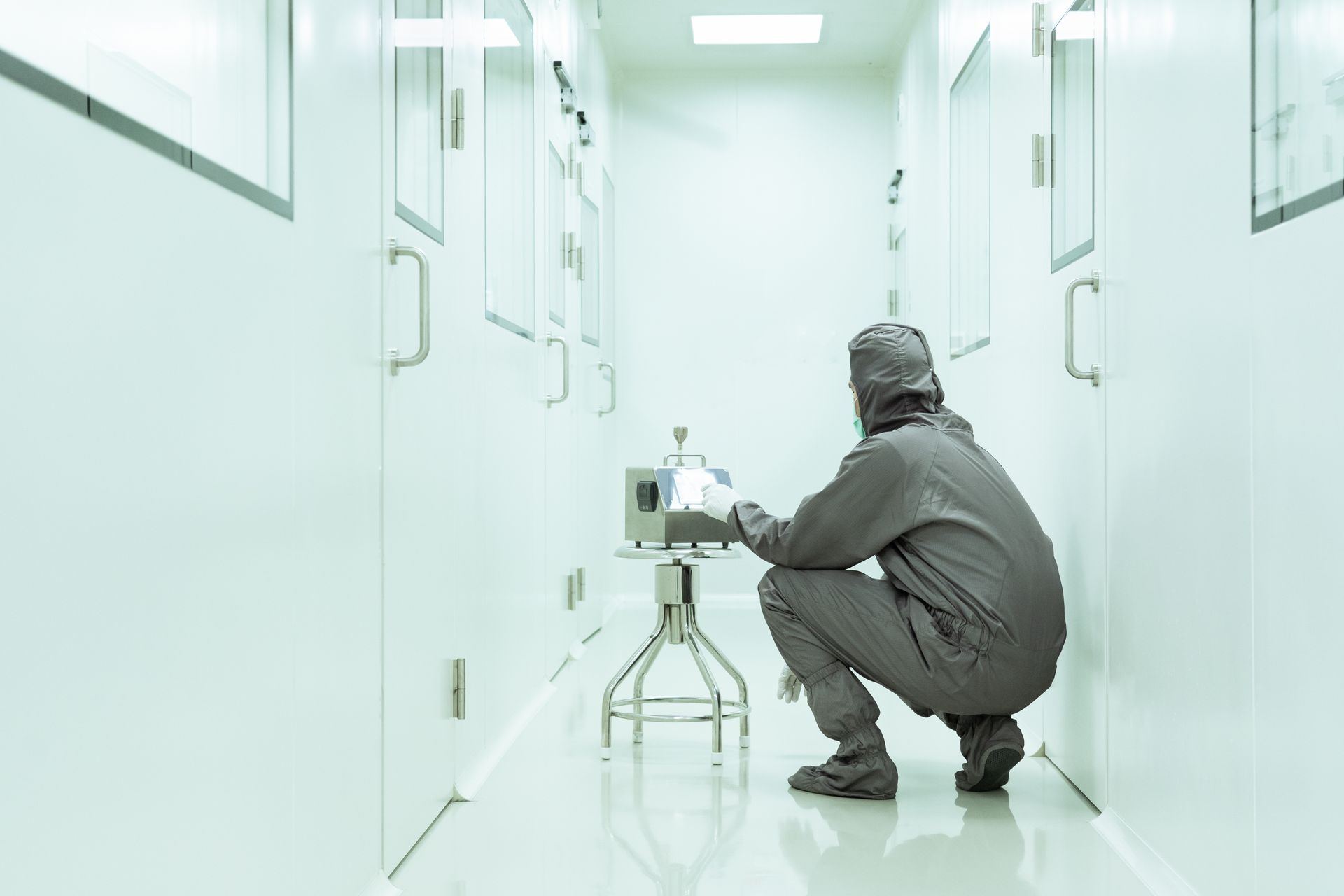
- Filter integrity (DOP/PAO testing)
Our meticulous approach ensures that your cleanroom operates at its optimal performance level and remains compliant with all relevant regulatory bodies. These certifications are proof of your commitment to quality and safety.
Essential cleanroom accessories and protocols
Maintaining a cleanroom's integrity depends not only on its physical structure but also on the accessories and operational protocols in place. We provide guidance on selecting and implementing appropriate cleanroom accessories, including:
- Storage and furniture: Specialized cleanroom storage and furniture designed to minimize particle generation and facilitate easy cleaning.
- Garments: Proper cleanroom garments, including suits, gloves, and masks, essential for preventing human-generated contamination.
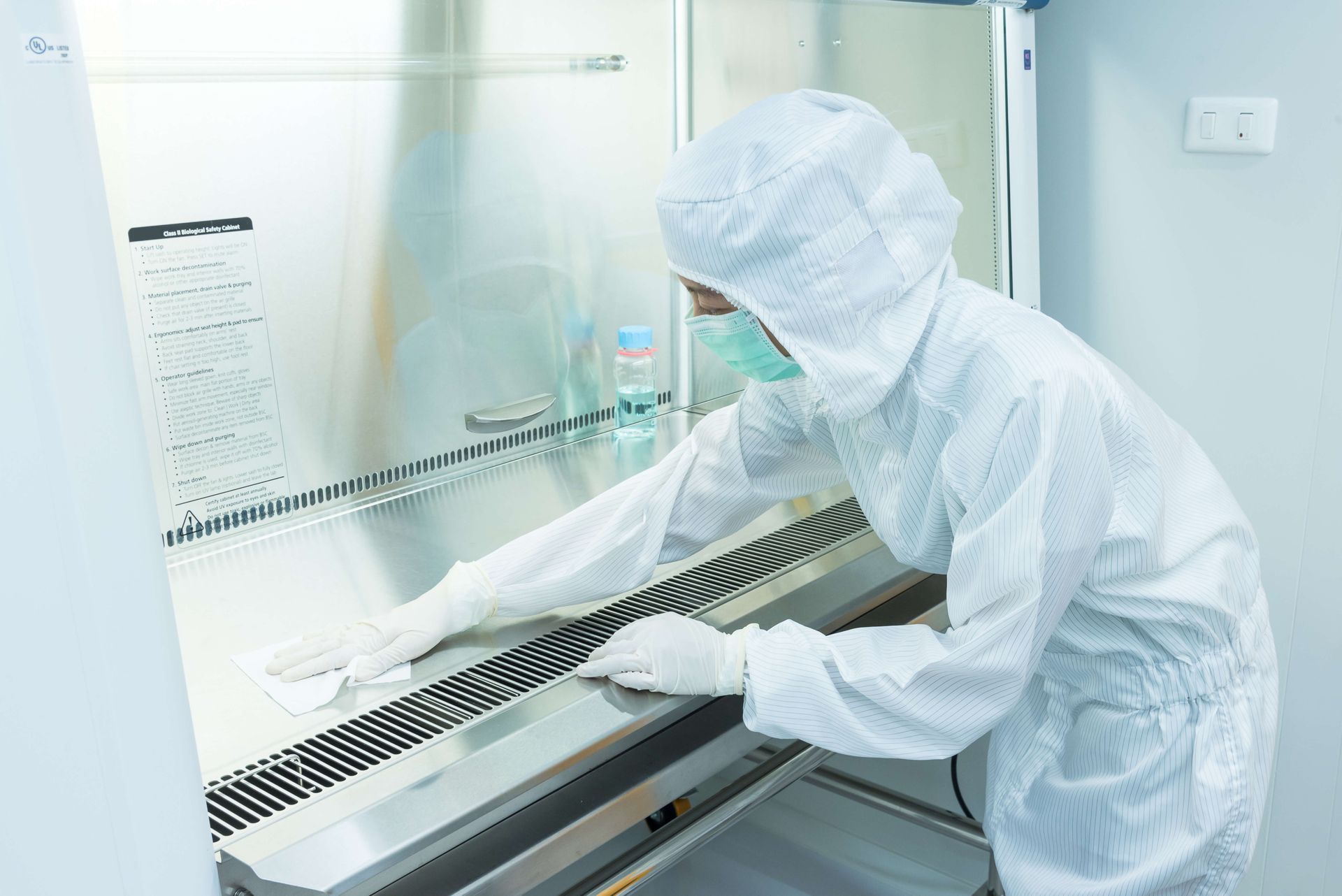
- Cleaning: Development of robust cleanroom cleaning protocols and selection of appropriate cleaning agents and tools to maintain particle control.
These elements, while seemingly small, play an enormous role in maintaining the stringent cleanliness levels required. We help you establish comprehensive training for personnel on proper cleanroom behavior and protocols, ensuring a consistent and effective approach to contamination control.
Cleanroom standards and classifications
Understanding the various cleanroom standards and classifications is fundamental to designing and operating a compliant facility. Different industries and applications require different levels of cleanliness, dictated by internationally recognized guidelines.
At 14644 Cleanroom, we are experts in navigating these complex standards, ensuring your project meets the precise requirements relevant to your operations. We frequently address topics like these in our blog, for instance, ISO Classifications Explained: Understanding Cleanroom Standards and Their Impact (by Kjeld Lund, October 3, 2025) and The Differences Between USP and ISO Cleanrooms (by Kjeld Lund, October 10, 2025).
Here’s an overview of some key standards we work with:
Standard....................Focus.............................Key Features
ISO 14644 Air Cleanliness Classes ISO 1-9
FS209E US Military Std Older; superseded by ISO
EU GMP Annex 1 Pharmaceutical Mfg Grades A, B, C, D
USP 797, 800, 825 Compounding Pharm Sterile & Hazardous
Choosing the correct classification for your cleanroom is a critical decision that impacts design, construction, and operational costs. Our consulting services ensure that you make informed decisions, balancing regulatory compliance with practical operational needs. For instance, a facility dealing with sterile pharmaceutical compounding will have far stricter requirements than one assembling electronic components.
Partner with 14644 Cleanroom for unparalleled expertise
Navigating the complexities of cleanroom projects requires not just technical knowledge but also decades of practical experience. Since 1992, 14644 Cleanroom has distinguished itself as a trusted partner, offering impartial and comprehensive consulting services.
Our commitment is to guide you through every stage, from initial concept to ongoing operation, ensuring your cleanroom is compliant, efficient, and perfectly suited to your specific industry needs. With our expertise, you can confidently meet stringent industry standards and focus on your core business, knowing your controlled environment is in expert hands. Our experience from over 100 cleanrooms and our focus on impartial advice help you avoid costly mistakes and secure a future-proof cleanroom solution.
Whether you're developing User Requirement Specifications, validating supplier quotations, managing projects, or requiring validation and certification, we are here to support you. We also advise on essential accessories, including storage, furniture, garments, and cleaning protocols, all crucial for maintaining environmental integrity.
For inquiries or to discuss your specific cleanroom project, please do not hesitate to contact us. Reach out to Kjeld Lund directly at +45 5160 6457 or kl@14644.dk. Our address is Strandvejen 23, DK 6000 Kolding.
Frequently asked questions about cleanrooms
What is the primary purpose of a cleanroom?
The primary purpose of a cleanroom is to control and minimize the concentration of airborne particles to a specified level. This controlled environment prevents contamination of sensitive products, processes, or research, which is crucial in industries like pharmaceuticals, biotechnology, and semiconductor manufacturing.
What kind of standards do cleanrooms adhere to?
Cleanrooms typically adhere to international standards such as ISO 14644 (which defines air cleanliness classes from ISO 1 to ISO 9), EU GMP Annex 1 (for pharmaceutical manufacturing, with grades A, B, C, D), and USP guidelines (like USP 797, 800, 825 for compounding pharmacies). These standards specify acceptable particle counts and other environmental parameters.
How does 14644 Cleanroom assist with cleanroom design?
We assist with cleanroom design by developing comprehensive User Requirement Specifications (URS), which outline your functional needs and regulatory requirements. Our expertise ensures that the design incorporates optimal airflow, filtration, pressure differentials, and material selection to achieve the desired cleanliness levels, all tailored to your specific industry and processes.
What services does 14644 Cleanroom offer for cleanroom operation?
For cleanroom operation, we offer services ranging from validation and certification to guidance on essential accessories and operational protocols. This includes thorough testing to ISO and GMP standards, advice on cleanroom storage and furniture, selecting appropriate cleanroom garments, and establishing effective cleanroom cleaning procedures to ensure ongoing compliance and performance.
Why is cleanroom validation and certification important?
Cleanroom validation and certification are important because they officially confirm that your facility meets the required cleanliness standards and regulatory guidelines. This process involves testing air particulate levels, airflow, pressure, temperature, and humidity, providing documented proof of your cleanroom's ability to perform as intended and minimizing your liability.
What industries benefit most from cleanroom technology?
Industries that benefit most from cleanroom technology include pharmaceuticals, biotechnology, medical device manufacturing, semiconductor manufacturing, aerospace, optics, and nanotechnology. Any field where microscopic contamination can compromise product quality, safety, or process integrity relies heavily on controlled environments.