


A comprehensive guide to cost management in cleanrooms
Kjeld Lund Oct. 8, 2025
This is the 3rd article I was asked to write for the UK based Cleanroom Technology
You can read it here : A comprehensive guide to cost management in cleanrooms
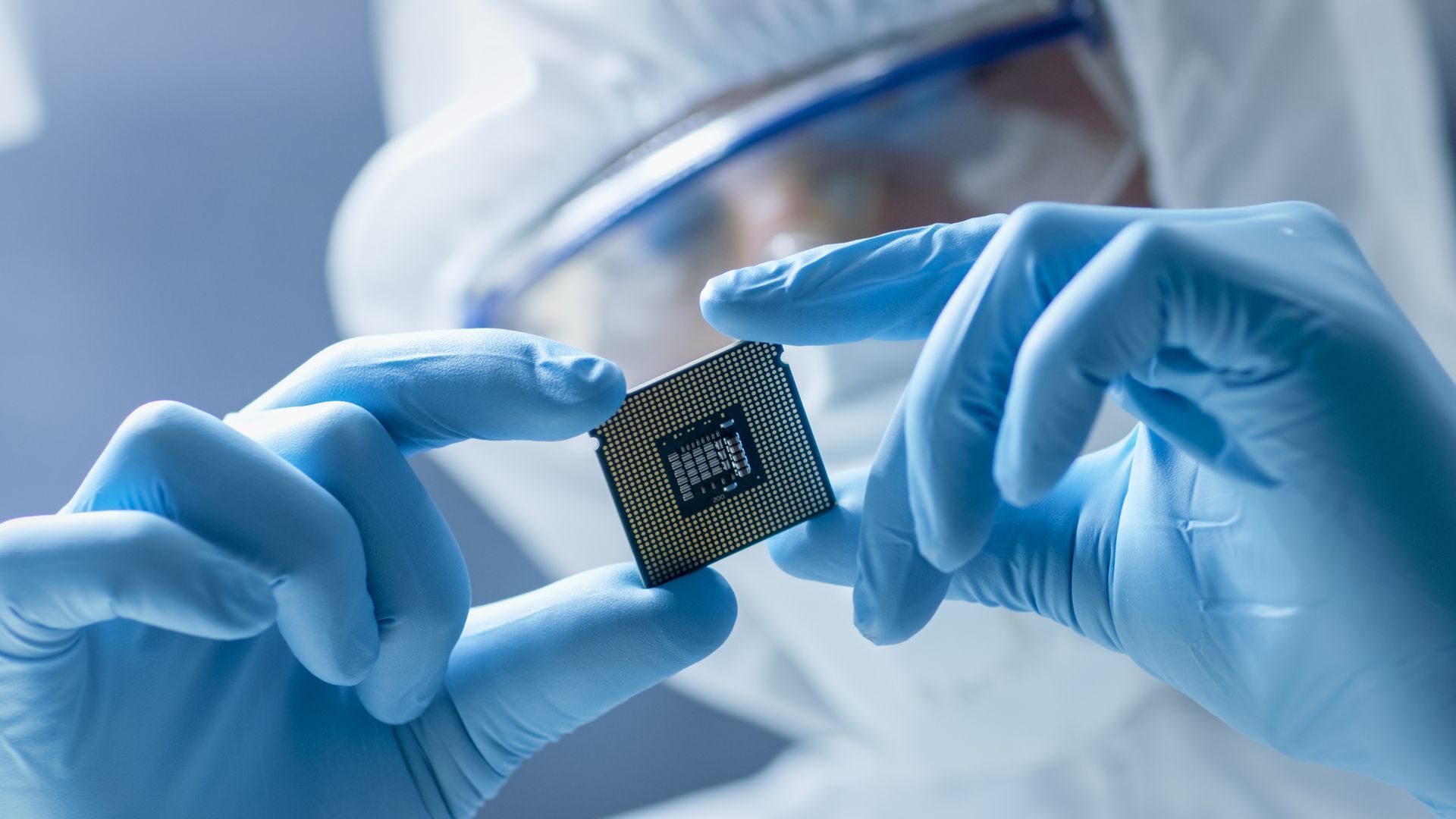
The Global Impact of Cleanrooms on Manufacturing 1 Introduction Cleanrooms have become an essential infrastructure component across global manufacturing, enabling industries to achieve unprecedented levels of precision, reliability, and contamination control. As product tolerances shrink and regulatory expectations intensify, cleanrooms allow manufacturers to produce consistent, defect-free outputs at scale. Their influence extends far beyond traditional sectors like pharmaceuticals and semiconductors—cleanrooms now shape advancements in aerospace, biotechnology, optics, medical devices, and emerging nanotechnologies. This article examines how cleanrooms drive global manufacturing capability, quality, and innovation. 2 Cleanrooms as Enablers of High-Precision Manufacturing Cleanrooms provide the controlled environment required for products where microscopic contaminants can compromise performance, safety, or functionality. By regulating airborne particles, microorganisms, humidity, temperature, and electrostatic conditions, cleanrooms enable: Ultra-fine geometries in semiconductor devices High-purity pharmaceutical and biologic production Precision assembly of medical implants Manufacturing of defect-free optical components Reliable fabrication of aerospace and defense technologies Without controlled environments, many modern products would be impossible to manufacture consistently. 3 Growth of Cleanrooms Driven by Technological Advancement Global demand for cleanrooms has expanded alongside emerging manufacturing technologies. Key drivers include: Shrinking semiconductor nodes that require ISO 3–5 environments. Biopharmaceutical expansion , including cell and gene therapies requiring aseptic or Grade A/B conditions. Advanced materials and nanotechnology , which depend on ultra-low particulate levels. Battery and energy-storage manufacturing , where contaminants degrade product performance. Medical device miniaturization demanding tight contamination control. As industries evolve toward higher performance and tighter tolerances, cleanroom infrastructure has become increasingly indispensable. 4 Cleanrooms Supporting Global Supply Chain Reliability Manufacturers rely on cleanrooms to ensure stable, reproducible production across global facilities. Cleanroom-controlled processes reduce variability and help companies: Meet international quality standards Harmonize production across regions Reduce defect rates and waste Maintain supply chain continuity Demonstrate compliance during global audits Standardized cleanroom design and operation also support technology transfer between manufacturing sites, enabling multinational firms to scale rapidly. 5 Regulatory Influence on Cleanroom Manufacturing Many industries operate under stringent regulatory frameworks that directly dictate cleanroom use. Examples include: GMP for pharmaceuticals and biologics , requiring controlled environments for aseptic fills, sterile filtration, and packaging. ISO 14644 standards guiding classification, testing, and monitoring across most cleanroom sectors. ISO 13485 requirements for medical device manufacturing environments. Aerospace and defense standards requiring rigorous contamination-control planning. Industry-specific environmental and safety regulations affecting chemical and nano-material use. Cleanrooms help manufacturers meet these obligations and maintain globally recognized compliance certifications. 6 Impact on Product Quality and Yield Cleanrooms directly influence product yield, consistency, and performance. With controlled environments: Defects related to airborne particles are minimized. Microbial contamination risks in sterile products are reduced. Surface cleanliness remains predictable during assembly. Complex devices can be produced with higher reliability. Rework, scrap, and batch failures decrease significantly. This yields major economic benefits—higher throughput, improved efficiency, and greater customer trust. 7 Cleanrooms as Innovation Accelerators Cleanroom environments make it possible to push technical limits in research and production. Their global impact includes enabling: Development of next-generation semiconductor architectures Manufacturing of biologics and personalized medicine Precision optical coatings for space and defense Advanced robotics and sensor technologies Emerging quantum computing hardware Microelectromechanical systems (MEMS) and nanofabrication Innovation often relies on the ability to control contamination to levels that support new material science and manufacturing precision. 8 Expansion into Emerging Markets As high-tech industries globalize, cleanroom infrastructure is rapidly expanding into emerging markets. Countries investing heavily in cleanroom-enabled manufacturing include those developing: Semiconductor fabs Vaccine and biologics facilities Battery and energy-storage plants Aerospace supply chains Optical and photonics production hubs This expansion strengthens local economies, diversifies global supply chains, and increases access to advanced manufacturing technologies worldwide. 9 Economic Benefits and Workforce Development Cleanroom manufacturing generates significant economic value by: Creating high-skill technical jobs Supporting engineering, construction, and validation industries Enabling export-driven manufacturing sectors Increasing national competitiveness in high-value markets Supporting local supply chains for components, consumables, and equipment Operating a cleanroom also requires specialized training, driving development of a more technically qualified workforce. 10 Environmental and Energy Considerations Cleanrooms are energy-intensive due to high airflow rates, filtration stages, and strict environmental controls. Their global impact includes increasing emphasis on: Energy-efficient HVAC systems Low-resistance HEPA/ULPA filters Variable-speed fan filter units Optimized air change rates driven by monitoring data Sustainable construction materials Life-cycle cost analysis and predictive maintenance Modern cleanroom design increasingly balances performance with environmental responsibility. 11 Standardization and Global Consistency ISO 14644 has become the universal reference for environmental classification and testing, enabling consistent cleanroom operation worldwide. Global standardization supports: Predictable quality across international facilities Cross-border product approvals Supplier and partner alignment Harmonized training and qualification programs Uniform validation and monitoring requirements This standardization strengthens manufacturing reliability at the global scale. 12 Cleanrooms and the Future of Manufacturing Cleanrooms will play a central role in emerging technologies and next-generation production systems. Future trends likely include: Increased use of mini-environments and isolator technologies Integration of real-time monitoring and smart building controls Expansion of modular and scalable cleanroom systems Growth in high-purity material production Greater reliance on automation to reduce human contamination As industries continue to innovate, cleanrooms will remain critical infrastructure for precision manufacturing. 13 Conclusion Cleanrooms have reshaped global manufacturing by enabling ultra-clean environments that support high-precision, high-reliability production. From semiconductors and biopharmaceuticals to aerospace and nanotechnology, cleanrooms ensure product quality, regulatory compliance, and operational stability across the world. Their impact extends beyond individual facilities—cleanrooms strengthen supply chains, drive economic growth, and enable the technological advancements that define modern industry. As emerging technologies demand even tighter environmental control, cleanrooms will continue to be a cornerstone of global manufacturing excellence. Read more here: About Cleanrooms: The ultimate Guide

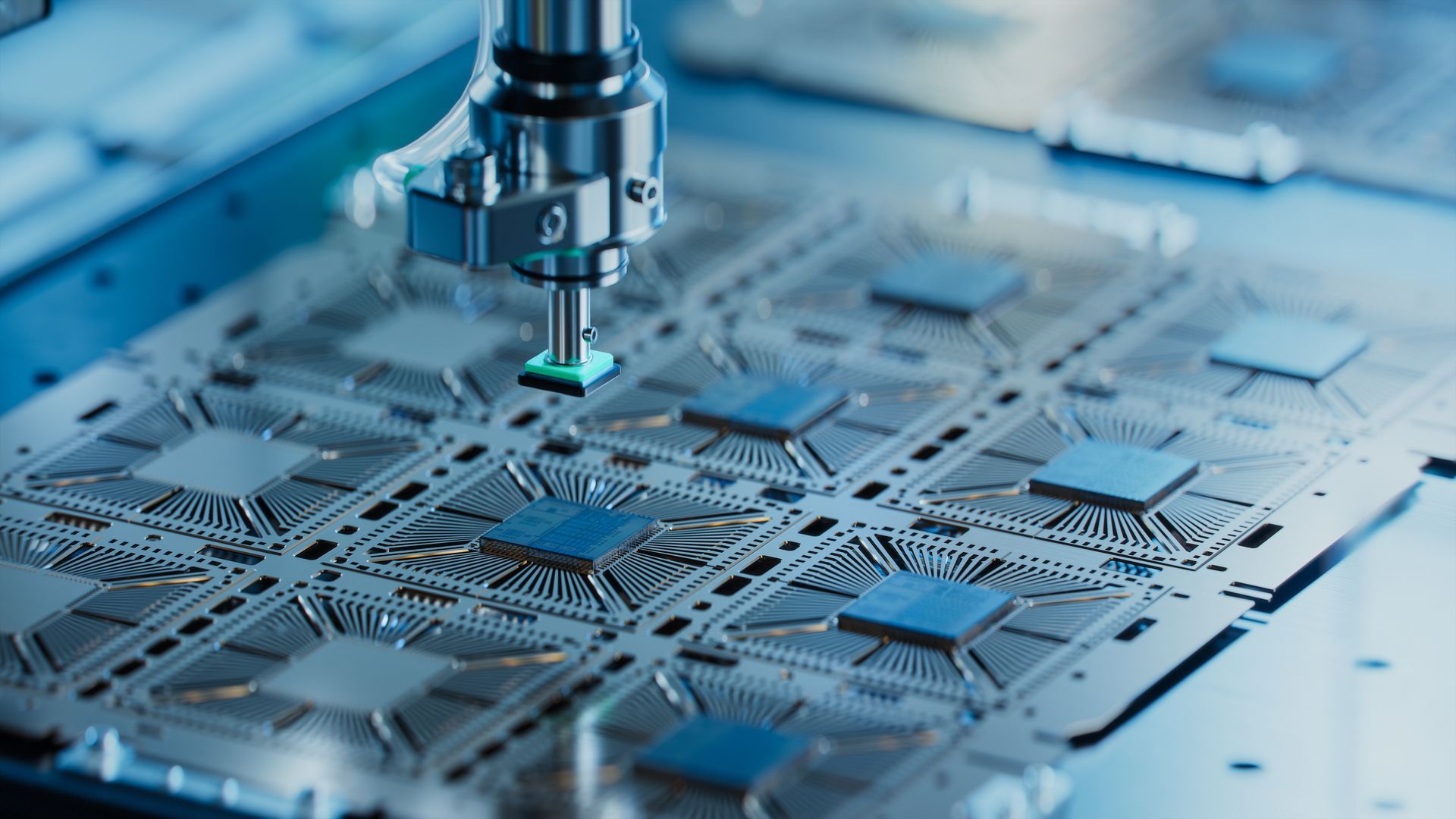
Cleanroom – your comprehensive guide At 14644 Cleanroom, we understand that a cleanroom is more than just a controlled environment; it's the foundation for critical operations across diverse industries. From pharmaceuticals and biotechnology to semiconductor manufacturing and aerospace, maintaining an ultra-clean, contaminant-free space is paramount for product integrity, research accuracy, and patient safety. Since 1992, we have been at the forefront of cleanroom consulting, having contributed to over 100 cleanroom projects, guided by the expertise of our CEO, Kjeld Lund. We are here to ensure your cleanroom meets the most stringent international standards, mitigating risks and optimizing performance. This page will walk you through what a cleanroom entails, why it’s critical, and how 14644 Cleanroom provides impartial, expert guidance through every stage, from design and construction to operation and certification. Our goal is to help you minimize liability and achieve a compliant, efficient, and safe controlled environment tailored precisely to your specific needs. What is a cleanroom? A cleanroom is a specially engineered and controlled environment designed to minimize the presence of airborne particles, such as dust, airborne microbes, aerosol particles, and chemical vapors. These controlled spaces are critical where even the smallest contaminants can compromise products, processes, or research. The level of control in a cleanroom is far beyond what can be achieved in standard rooms, involving specialized air filtration systems, controlled temperature and humidity, and strict operational protocols. The primary function of a cleanroom is to regulate particulate contamination to a specified level, ensuring the integrity of sensitive processes. This control extends to factors like temperature, pressure, and humidity, all of which are meticulously managed to create an ideal operating environment. Without a properly designed and operated cleanroom, many high-tech manufacturing processes, pharmaceutical productions, and sensitive scientific experiments would simply not be possible. Why is a cleanroom essential for your industry? For many industries, the integrity of products and processes hinges on a meticulously controlled environment. A cleanroom isn't just a desirable feature; it's a critical necessity. Consider the pharmaceutical industry, where even a microscopic particle can render a batch of medication unsafe or ineffective. In semiconductor manufacturing, minuscule dust can destroy delicate microchips. These are just a few examples of why maintaining a controlled space is non-negotiable. The benefits of a well-implemented cleanroom extend beyond merely avoiding contamination. They include: Ensuring product quality and reliability: Protecting sensitive materials from environmental contaminants. Meeting regulatory compliance: Adhering to strict industry standards like ISO 14644, EU GMP, and USP guidelines. Enhancing process efficiency: Reducing contamination-related defects and rework. Protecting personnel: In certain applications, cleanrooms also protect staff from hazardous materials. At 14644 Cleanroom, we help you understand these crucial requirements and implement solutions that not only meet but exceed expectations, thereby helping to limit your liability . Our expertise in cleanroom design and construction Designing and constructing a cleanroom is a complex undertaking that requires specialized knowledge and meticulous attention to detail. Since 1992, 14644 Cleanroom has gained extensive experience in guiding clients through every phase of this process. We’ve been involved in over 100 cleanroom projects, leveraging our deep understanding of international standards and best practices. Cleanroom design considerations A successful cleanroom begins with an optimized design. Our approach involves a thorough understanding of your specific needs, process flows, and the required contamination control levels. We assist in creating comprehensive User Requirement Specifications (URS), which are foundational documents that define all aspects of your functional needs for the cleanroom. This ensures that the design is perfectly aligned with your operational goals and regulatory obligations. Key design elements we focus on include: Airflow dynamics and filtration (HEPA/ULPA filters) Pressure differentials to prevent contaminant ingress Material selection for surfaces, walls, floors, and ceilings Entry and exit protocols and gowning rooms Integration of specialized equipment We provide cleanroom URS development to ensure that every detail is captured from the outset, paving the way for a compliant and efficient facility. Cleanroom construction oversight During the construction phase, our role is to provide impartial oversight and expert advice. We assist with the validation of supplier quotations , ensuring that all proposed solutions meet the highest standards and align with your URS. Our project management expertise ensures that construction progresses smoothly, on schedule, and within budget, with adherence to all cleanroom-specific requirements. We work collaboratively with architects, contractors, and engineering teams, bringing our specialized knowledge to bridge any gaps and ensure that the final build is robust, compliant, and ready for operation. This proactive involvement minimizes costly rework and ensures the long-term success of your cleanroom. Operating and maintaining your cleanroom Once your cleanroom is built, successful operation and maintenance are vital for sustaining its performance and compliance. At 14644 Cleanroom, we offer comprehensive consulting services to support you throughout the operational lifecycle of your facility. Cleanroom validation and certification Validation and certification are critical steps to formally confirm that your cleanroom meets the required standards. We conduct thorough cleanroom validation and cleanroom certification processes according to international standards such as ISO 14644 (ISO 1-9), FS209E, EU GMP ABCD, and USP 797, 800, 825. This includes testing for: Airborne particulate cleanliness classes Airflow patterns and velocity Differential pressure Temperature and humidity control Recovery rates Filter integrity (DOP/PAO testing) Our meticulous approach ensures that your cleanroom operates at its optimal performance level and remains compliant with all relevant regulatory bodies. These certifications are proof of your commitment to quality and safety. Essential cleanroom accessories and protocols Maintaining a cleanroom's integrity depends not only on its physical structure but also on the accessories and operational protocols in place. We provide guidance on selecting and implementing appropriate cleanroom accessories , including: Storage and furniture: Specialized cleanroom storage and furniture designed to minimize particle generation and facilitate easy cleaning. Garments: Proper cleanroom garments , including suits, gloves, and masks, essential for preventing human-generated contamination. Cleaning: Development of robust cleanroom cleaning protocols and selection of appropriate cleaning agents and tools to maintain particle control. These elements, while seemingly small, play an enormous role in maintaining the stringent cleanliness levels required. We help you establish comprehensive training for personnel on proper cleanroom behavior and protocols, ensuring a consistent and effective approach to contamination control. Cleanroom standards and classifications Understanding the various cleanroom standards and classifications is fundamental to designing and operating a compliant facility. Different industries and applications require different levels of cleanliness, dictated by internationally recognized guidelines. At 14644 Cleanroom, we are experts in navigating these complex standards, ensuring your project meets the precise requirements relevant to your operations. We frequently address topics like these in our blog, for instance, ISO Classifications Explained: Understanding Cleanroom Standards and Their Impact (by Kjeld Lund, October 3, 2025) and The Differences Between USP and ISO Cleanrooms (by Kjeld Lund, October 10, 2025). Here’s an overview of some key standards we work with: Standard....................Focus.............................Key Features ISO 14644 Air Cleanliness Classes ISO 1-9 FS209E US Military Std Older; superseded by ISO EU GMP Annex 1 Pharmaceutical Mfg Grades A, B, C, D USP 797, 800, 825 Compounding Pharm Sterile & Hazardous Choosing the correct classification for your cleanroom is a critical decision that impacts design, construction, and operational costs. Our consulting services ensure that you make informed decisions, balancing regulatory compliance with practical operational needs. For instance, a facility dealing with sterile pharmaceutical compounding will have far stricter requirements than one assembling electronic components. Partner with 14644 Cleanroom for unparalleled expertise Navigating the complexities of cleanroom projects requires not just technical knowledge but also decades of practical experience. Since 1992, 14644 Cleanroom has distinguished itself as a trusted partner, offering impartial and comprehensive consulting services. Our commitment is to guide you through every stage, from initial concept to ongoing operation, ensuring your cleanroom is compliant, efficient, and perfectly suited to your specific industry needs. With our expertise, you can confidently meet stringent industry standards and focus on your core business, knowing your controlled environment is in expert hands. Our experience from over 100 cleanrooms and our focus on impartial advice help you avoid costly mistakes and secure a future-proof cleanroom solution. Whether you're developing User Requirement Specifications, validating supplier quotations, managing projects, or requiring validation and certification, we are here to support you. We also advise on essential accessories, including storage, furniture, garments, and cleaning protocols, all crucial for maintaining environmental integrity. For inquiries or to discuss your specific cleanroom project, please do not hesitate to contact us. Reach out to Kjeld Lund directly at +45 5160 6457 or kl@14644.dk . Our address is Strandvejen 23, DK 6000 Kolding. Frequently asked questions about cleanrooms What is the primary purpose of a cleanroom? The primary purpose of a cleanroom is to control and minimize the concentration of airborne particles to a specified level. This controlled environment prevents contamination of sensitive products, processes, or research, which is crucial in industries like pharmaceuticals, biotechnology, and semiconductor manufacturing. What kind of standards do cleanrooms adhere to? Cleanrooms typically adhere to international standards such as ISO 14644 (which defines air cleanliness classes from ISO 1 to ISO 9), EU GMP Annex 1 (for pharmaceutical manufacturing, with grades A, B, C, D), and USP guidelines (like USP 797, 800, 825 for compounding pharmacies). These standards specify acceptable particle counts and other environmental parameters. How does 14644 Cleanroom assist with cleanroom design? We assist with cleanroom design by developing comprehensive User Requirement Specifications (URS), which outline your functional needs and regulatory requirements. Our expertise ensures that the design incorporates optimal airflow, filtration, pressure differentials, and material selection to achieve the desired cleanliness levels, all tailored to your specific industry and processes. What services does 14644 Cleanroom offer for cleanroom operation? For cleanroom operation, we offer services ranging from validation and certification to guidance on essential accessories and operational protocols. This includes thorough testing to ISO and GMP standards, advice on cleanroom storage and furniture , selecting appropriate cleanroom garments , and establishing effective cleanroom cleaning procedures to ensure ongoing compliance and performance. Why is cleanroom validation and certification important? Cleanroom validation and certification are important because they officially confirm that your facility meets the required cleanliness standards and regulatory guidelines. This process involves testing air particulate levels, airflow, pressure, temperature, and humidity, providing documented proof of your cleanroom's ability to perform as intended and minimizing your liability. What industries benefit most from cleanroom technology? Industries that benefit most from cleanroom technology include pharmaceuticals, biotechnology, medical device manufacturing, semiconductor manufacturing, aerospace, optics, and nanotechnology. Any field where microscopic contamination can compromise product quality, safety, or process integrity relies heavily on controlled environments.
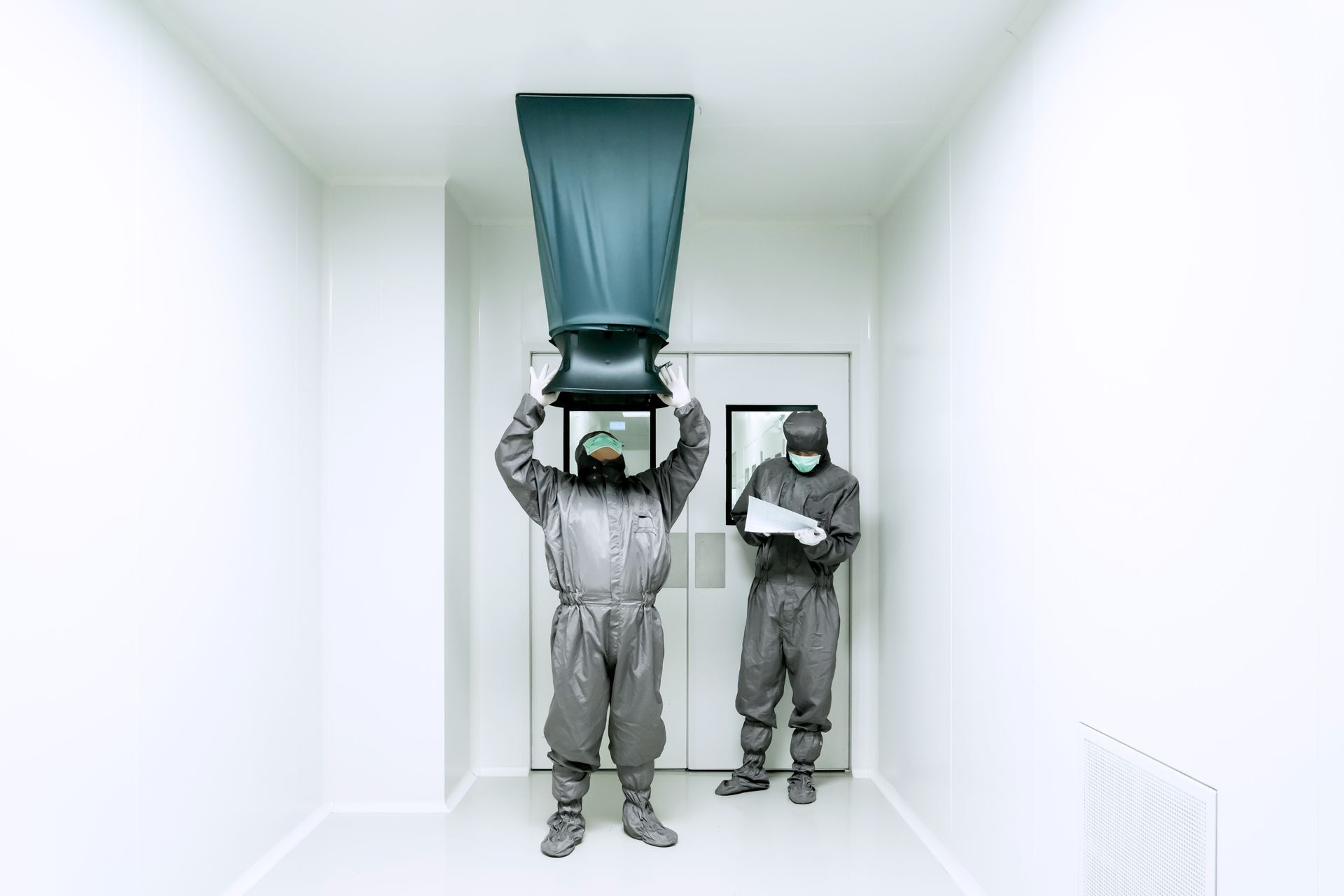
Advanced Filtration Technologies for Cleanroom Air Quality 1 Introduction Advanced filtration technologies are central to achieving and maintaining cleanroom air quality. Cleanrooms depend on engineered airflow systems and high-efficiency filters to control particulate and microbial contaminants, protect sensitive processes, and meet ISO 14644 classification requirements. As industries adopt more precise manufacturing techniques and tighter environmental specifications, filtration systems must deliver higher performance, improved energy efficiency, and consistent reliability. This article explains the filtration technologies that underpin modern cleanroom air systems, their engineering principles, and the considerations required for compliant, stable operation. 2 The Role of Filtration in Cleanroom Performance Cleanroom air quality is determined largely by how effectively airborne particles are removed from supply air. Even state-of-the-art HVAC systems cannot maintain classification levels without properly selected, installed, and maintained filtration stages. Filtration supports: ISO 14644 particle concentration compliance across various size thresholds. Stable airflow patterns , including laminar flow in critical zones. Protection of sensitive equipment and product surfaces from particulate deposition. Reduction of microbial load , especially in sterile and aseptic environments. Sustained performance under continuous, high-volume air exchange rates. Because filtration directly affects cleanroom stability, it must be engineered as part of an integrated HVAC and contamination-control strategy. 3 Pre-Filtration: The First Line of Defense Pre-filters protect HEPA and ULPA filters from premature loading by capturing larger particles. Common pre-filter technologies include: MERV 8–11 pleated filters for coarse dust and lint. Bag filters or cartridge filters for higher holding capacity. MERV 13–15 intermediate filters when extended HEPA life is required. Pre-filtration reduces operating costs by extending the service life of final filters, stabilizes airflow, and maintains HVAC efficiency. Properly staged filtration is especially important in facilities with high outdoor air requirements or significant particulate burden. 4 HEPA Filtration: The Core Cleanroom Technology High-Efficiency Particulate Air (HEPA) filters are the standard final filters for most cleanroom classifications. Performance characteristics: Minimum efficiency of 99.97% at 0.3 µm (the MPPS—Most Penetrating Particle Size). Typically constructed from microfiberglass media formed into deep pleats. Designed to capture particulates via diffusion, interception, and inertial impaction. Applications: ISO 5–8 cleanrooms Semiconductor fabs Biopharmaceutical and aseptic processing areas Medical device assembly Engineering considerations: Filters are installed in Terminal HEPA housings or Fan Filter Units (FFUs) . All HEPA filters require on-site leak testing (DOP/PAO testing) during installation and routine maintenance. Pressure drops must be monitored to maintain required airflow and differential pressures. HEPA filters remain the industry standard due to their proven effectiveness, reliability, and cost-efficiency. 5 ULPA Filtration: Ultra-High Efficiency for Critical Applications Ultra-Low Penetration Air (ULPA) filters provide efficiencies of 99.999% at 0.1–0.2 µm , making them suitable for the most sensitive environments. Where ULPA filters are used: ISO 4 and ISO 3 cleanrooms Nanofabrication and microelectronics High-end pharmaceutical isolators Specialty R&D requiring ultra-clean environments Advantages: Enhanced capture of submicron particles and aerosols. Support for ultra-low contamination thresholds in precision processes. Limitations: Higher pressure drop and energy consumption. Stricter installation tolerances. Generally shorter service life than HEPA filters. ULPA filters are selected only when process requirements justify the increased operational cost. 6 Fan Filter Units (FFUs) and Distributed Filtration Fan Filter Units integrate a fan with a HEPA or ULPA filter, providing localized clean air delivery. Benefits: Modular and scalable cleanroom layouts. Independent control of airflow to each unit. Easier retrofits and reduced ductwork requirements. Suitable for ISO 5 and ISO 6 environments where airflow predictability is critical. Engineering considerations: FFUs must be selected for low vibration , low noise , and energy efficiency . Airflow uniformity must be verified with velocity mapping . FFU maintenance schedules must include motor inspections and filter integrity testing. FFUs are common in semiconductor, optical, and medical-device cleanrooms utilizing grid-based ceiling systems. 7 Advanced Media Technologies Filtration performance is influenced by the media used within filters. Modern technologies improve particle capture efficiency, reduce resistance, and extend filter life. Notable media types include: Microglass fibers: Traditional, highly effective HEPA and ULPA media. PTFE membranes: Low resistance, robust chemical compatibility, and suited for humid environments. Nanofiber coatings: Enhance particle capture while reducing initial pressure drop. Electrostatically charged media: Used mainly in pre-filtration to increase efficiency without added resistance. Choosing the right filter media ensures compatibility with airflow rates, temperature, humidity, and chemical exposure. 8 Molecular Filtration for VOC and Gas Control Some cleanrooms require removal of volatile organic compounds (VOCs) or corrosive gases that can damage products or equipment. Common molecular filtration media include: Activated carbon for VOC adsorption. Chemically impregnated media for acid, base, or oxidizer removal. Hybrid filters combining particulate and molecular filtration in one housing. Cleanrooms for microelectronics, optics, and advanced materials often require molecular filtration to prevent corrosion, product defects, or chemical interference. 9 Recirculation and Supply Air Systems Cleanrooms frequently use a combination of: Recirculated air filtered through HEPA/ULPA units. Fresh outdoor air treated with pre-filters and intermediate filters. The balance of recirculation to make-up air affects: Pressure cascades Energy consumption Filtration life cycles Humidity and temperature control Engineering teams must size filtration stages to maintain classification while optimizing energy and operational efficiency. 10 Filtration Integrity Testing ISO 14644 and GMP environments require routine verification of filter performance. Standard tests include: DOP/PAO aerosol leak testing for HEPA and ULPA filters Airflow velocity and uniformity tests Pressure-drop monitoring Airflow visualization (smoke studies) for unidirectional flow areas Filter frame and gasket inspections for bypass risk Integrity testing ensures filters are correctly installed, free of leaks, and performing to specification. 11 Maintenance, Monitoring, and Replacement Strategies Filter performance degrades over time due to particle loading, humidity, or chemical interactions. Effective programs include: Defined pressure-drop limits for filter replacement. Routine visual inspections of gaskets, frames, and housings. Scheduled integrity testing based on classification and regulatory requirements. Monitoring through building management systems (BMS) for early detection of performance loss. Documented preventive maintenance integrated into the cleanroom’s quality system. Proactive maintenance reduces energy consumption, prevents contamination events, and extends equipment life. 12 Energy Efficiency Considerations Filtration represents a significant contributor to HVAC energy use. Efficiency can be improved through: Low-resistance HEPA/ULPA media Variable-speed FFUs Right-sized filter stages aligned with actual contamination loads Optimized airflow setpoints driven by real-time monitoring High-performance pre-filtration to reduce HEPA loading Modern designs prioritize energy savings without sacrificing cleanliness or compliance. 13 Best Practices for Cleanroom Filtration System Design A high-performing cleanroom filtration system integrates: A well-sequenced filtration train (pre-filter → intermediate filter → HEPA/ULPA). Proper airflow modeling and balancing. Regular integrity testing and performance audits. Material compatibility evaluations for process chemicals or humidity. Clear documentation and change control for filter replacements or system modifications. Integration with contamination control strategies and environmental monitoring plans. Holistic design ensures reliable cleanroom performance and simplified long-term operation. 14 Conclusion Advanced filtration technologies are essential for maintaining cleanroom air quality, supporting contamination control, and ensuring compliance with ISO 14644 and GMP expectations. From HEPA and ULPA filters to FFUs, molecular filtration, and modern media innovations, effective filter design and maintenance are critical to the stability and performance of cleanroom environments. By combining engineered airflow, validated filtration stages, and ongoing monitoring, cleanrooms can maintain predictable air quality, minimize contamination risks, and support high-precision manufacturing and research operations. Read more here: About Cleanrooms: The ultimate Guide